

Miami F1 Race Tips: 15 Tips for Going to the Miami Grand Prix
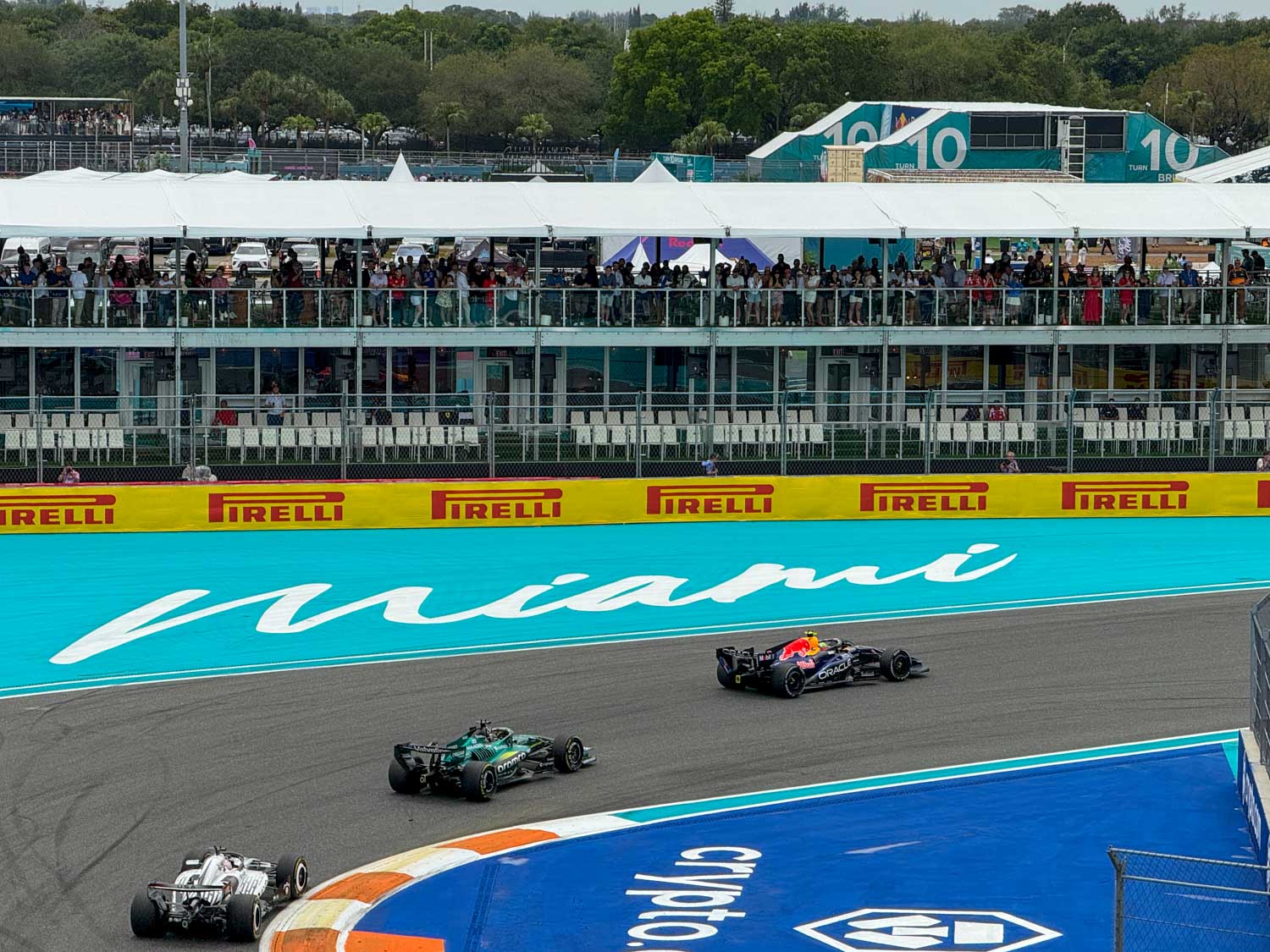
The Miami Grand Prix may be one of the newer races on the Formula 1 calendar, but it looks like it’s here to stay, with a contract through at least 2041. Which means there’s a good chance that you might end up considering going to this race!
Going to the Miami Grand Prix is like going to one big South Beach party; it feels young and fun, and yet is (perhaps surprisingly) well-organized once you get inside. Yes, there’s glitz and glamor here with celebrities and influencers galore, but there’s also great food, cool fan activations, and some memorable track views.
Miami has swiftly become a popular race for fans to attend, strictly because of the festival-like vibes. It’s not a race that was high on my F1 to-do list, if I’m being honest, but then I ended up planning a trip to the Miami GP anyway!
If you’re thinking of going (or already planning to go) to the Miami Grand Prix soon, here’s everything you need to know about attending this particular F1 race in person.
An intro to the Miami Grand Prix
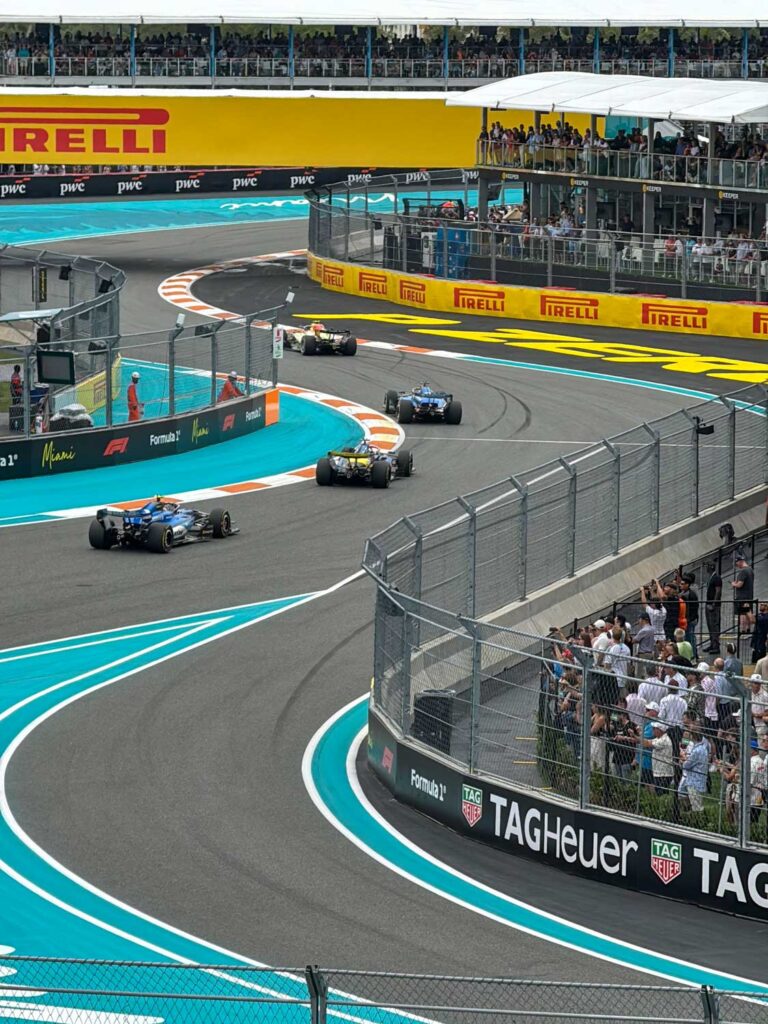
The Miami Grand Prix is one of the glitziest on the calendar; it’s usually filled with celebrities and a party vibe alongside a unique track set-up around Hard Rock Stadium. It’s one of the newer races on the F1 calendar, with the first race being held in 2022.
Where does the Miami Grand Prix take place?
The Miami Grand Prix takes places in Miami, Florida (well, technically Miami Gardens) at the Miami International Autodrome. This is a 5.412-kilometer (3.36-mile) long temporary circuit built around the Hard Rock Stadium, where the Miami Dolphins play football. (It’s not a street circuit, though; it feels like a “regular” circuit, except that it’s not permanent.)
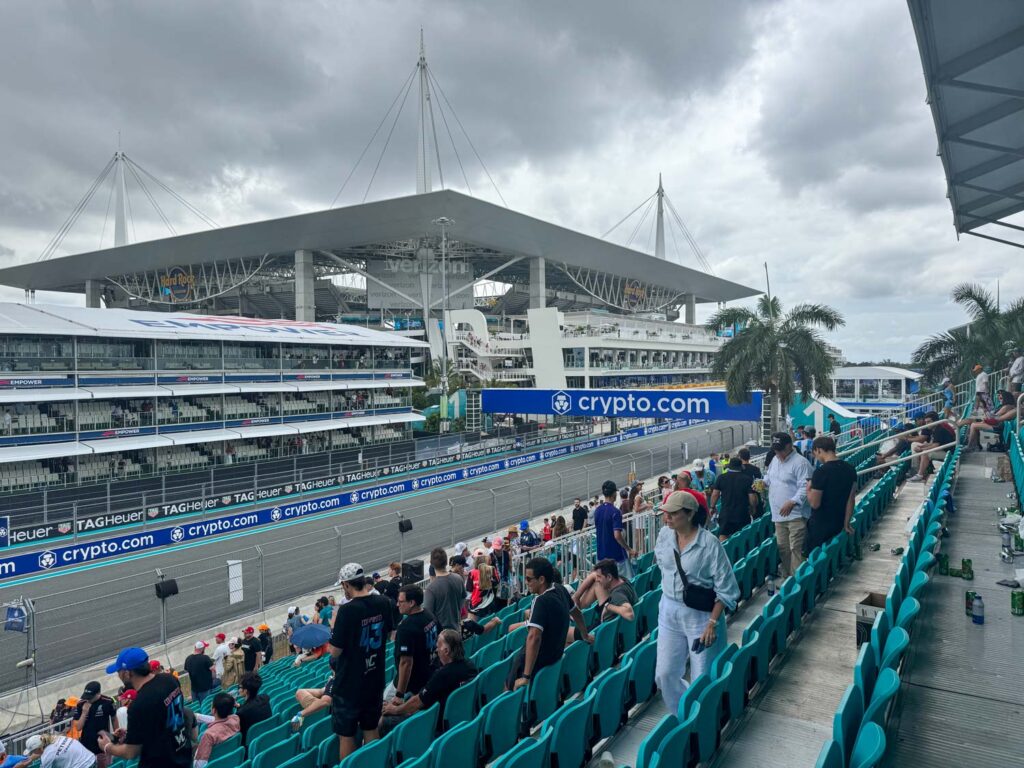
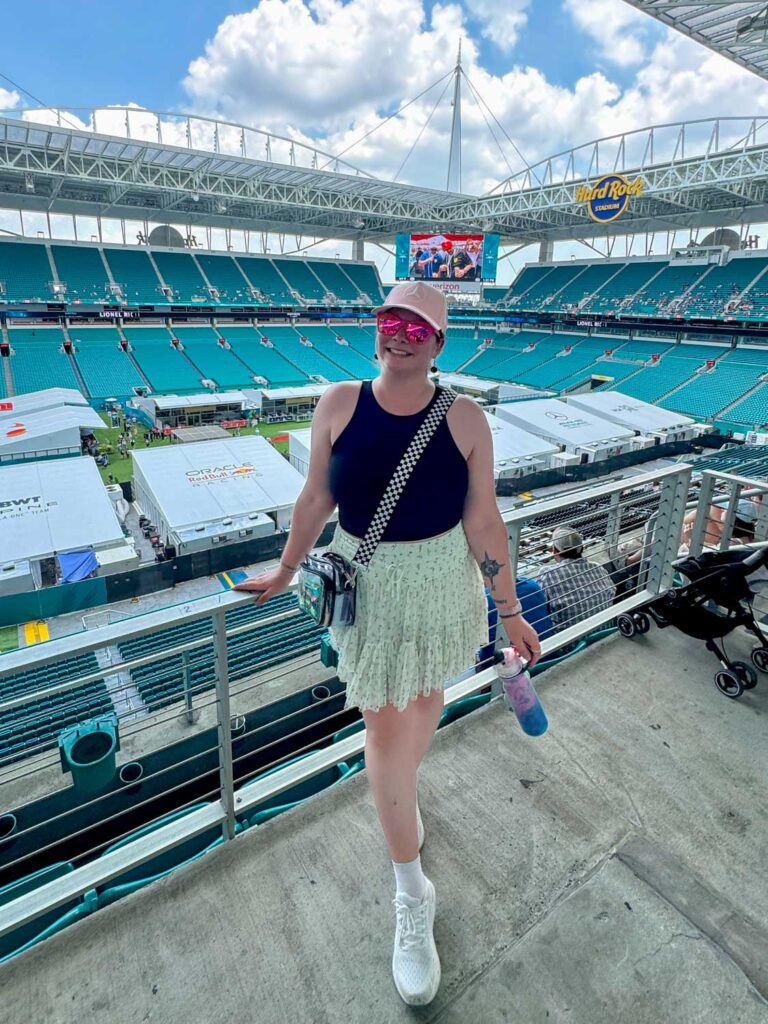
The most unique aspect of this track is that part of the F1 paddock here (the part with all the team hospitality trailers) is actually set up on the inside of Hard Rock Stadium (basically on the football field), which is really unique!
When is the Miami Grand Prix?
The Miami Grand Prix tends to take place in early May each year, and has been the first US race on the calendar each year since its inception. This year, the Miami GP takes place May 1-3, 2026, and it’s a sprint race weekend. The schedule is:
Our top Miami Grand Prix tips
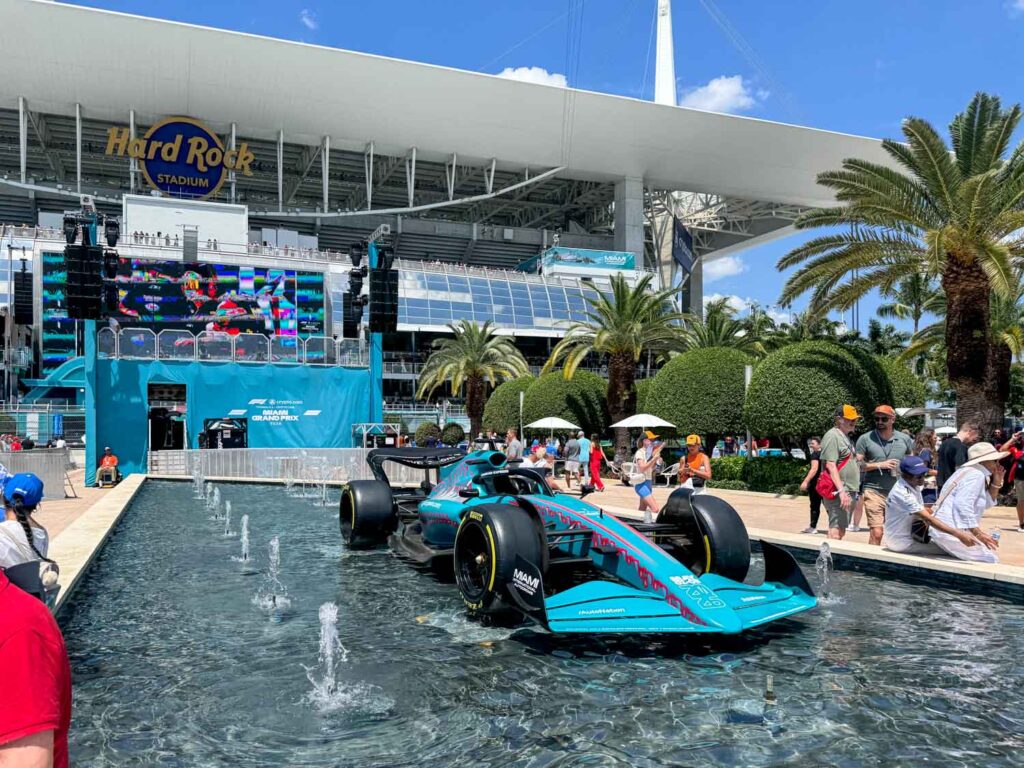
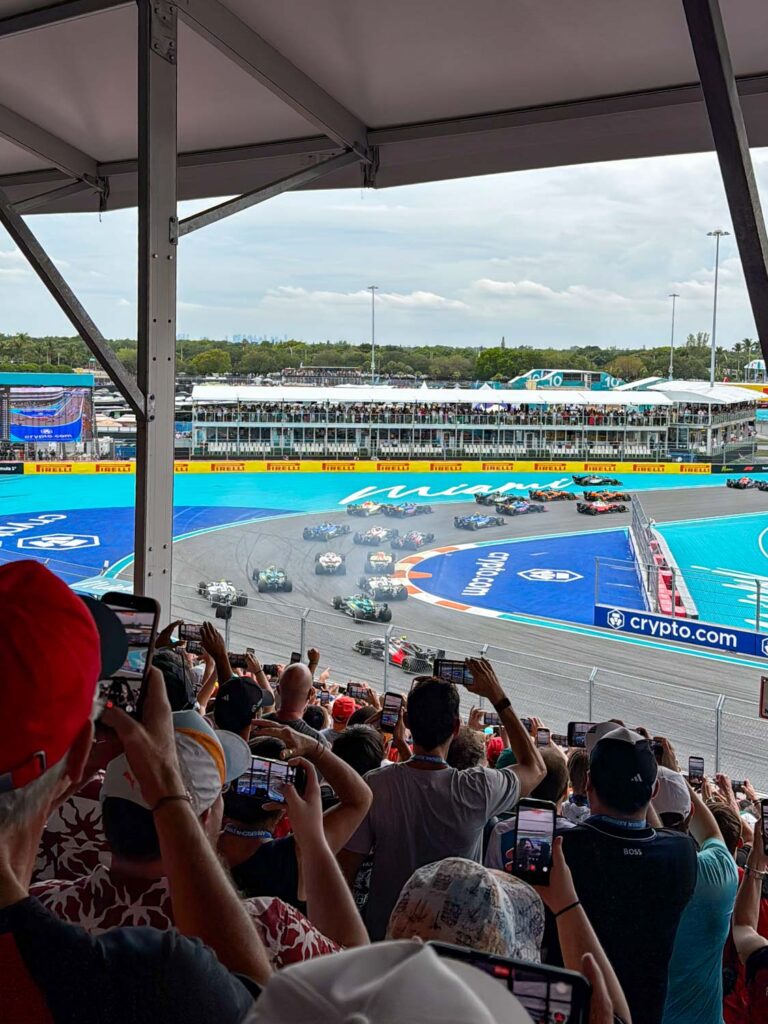
I (Amanda) have been to the Miami Grand Prix, and there are lots of things you’ll want to know before you go, including about the strict bag rules, how to get to the circuit, and what to expect once you’re there on race weekend.
These tips are based on my personal race experience plus all the research I’ve done about attending this F1 race in Miami. (You can also find our quick Miami race guide here.)
1. Be strategic about your hotel

The good news is that Miami is already a popular tourist destination and has LOTS of hotels in various price ranges to choose from. The bad news is that most of those hotels jack the prices up around major events like the Miami Grand Prix, so if you want to find a good hotel at a good price, you definitely need to book as early as possible.
You also want to pay close attention to where your hotel is located. “In Miami” can be misleading, as Miami is a huge area made up of smaller towns/neighborhoods that often also have “Miami” in their name. Keep in mind that the race takes place in Miami Gardens, which is NOT in the city of Miami or Miami Beach.
Areas closer to the circuit include Aventura, Hollywood, and Miramar.
If you stay at a hotel in Miami proper or Miami Beach (like South Beach), it’s going to take you *at least* an hour to travel from there to the circuit in a car. (More on getting to the Miami International Autodrome later!) I stayed at a hotel in South Beach and we had private transport arranged for us, but it definitely meant lots of time spent in a van/in traffic every day!
2. Get the right type of ticket for *you*
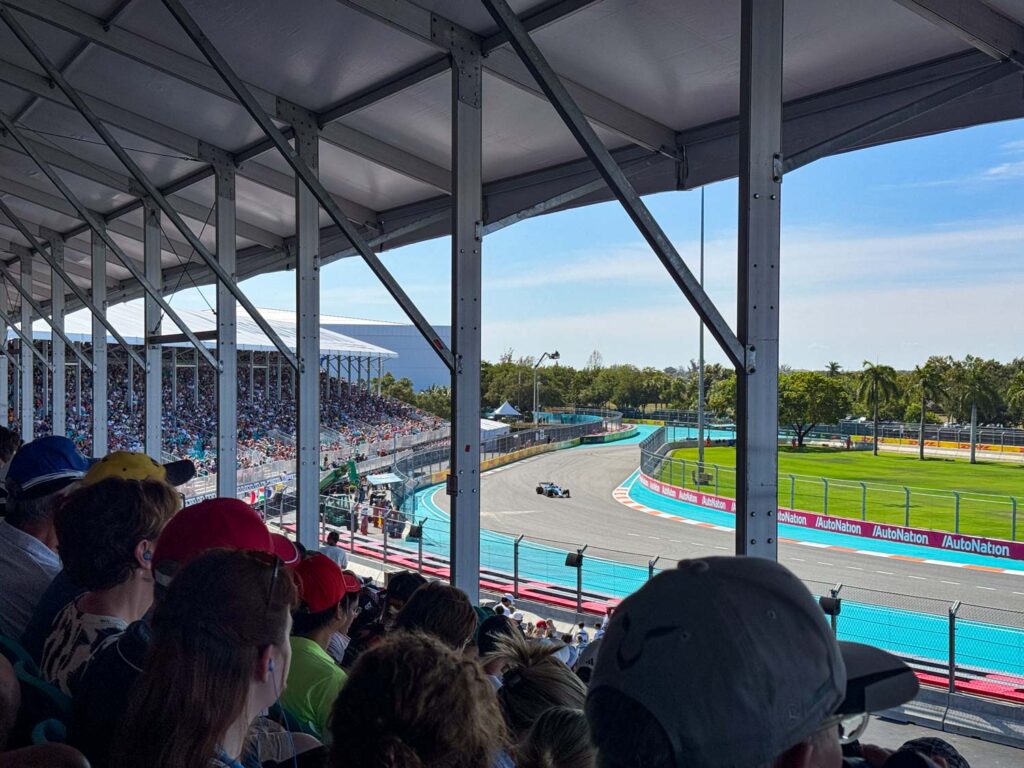
Miami has some really unique ticket options, whether you want to hang out in a pool, sit in a shaded grandstand, or mill around the different campus zones with a general admission ticket.
Some of the ticket options in Miami include:
- Campus Pass – This is general admission, and these tickets don’t go on sale until closer to the race. You get access to a large number of GA areas around the circuit, including the various campus zones and a few elevated viewing platforms (though access to these isn’t guaranteed, and they fill up quickly on race day). As far as general admission tickets go, these are pretty good if you want access to the circuit for the least amount of money.
- Grandstand tickets – You can buy 1-day or 3-day passes for a single grandstand, or go for the 3-day Grandstand Pass, where you get to sit in 3 different grandstands over the course of the weekend. In 2026, there were also team-branded grandstands for Red Bull, McLaren, Williams, and Cadillac (3-day passes only for these).
- Clubs and lounges – Miami does luxury lounges well. New in 2026 was the MSC Yacht Club, which is a multi-level lounge-club shaped like a ship with indoor areas, a pool, and good track views. There’s also the Hard Rock Beach Club, which has a pool with cabanas around it and a stage for performances (though I’m told this one doesn’t really have good track views).
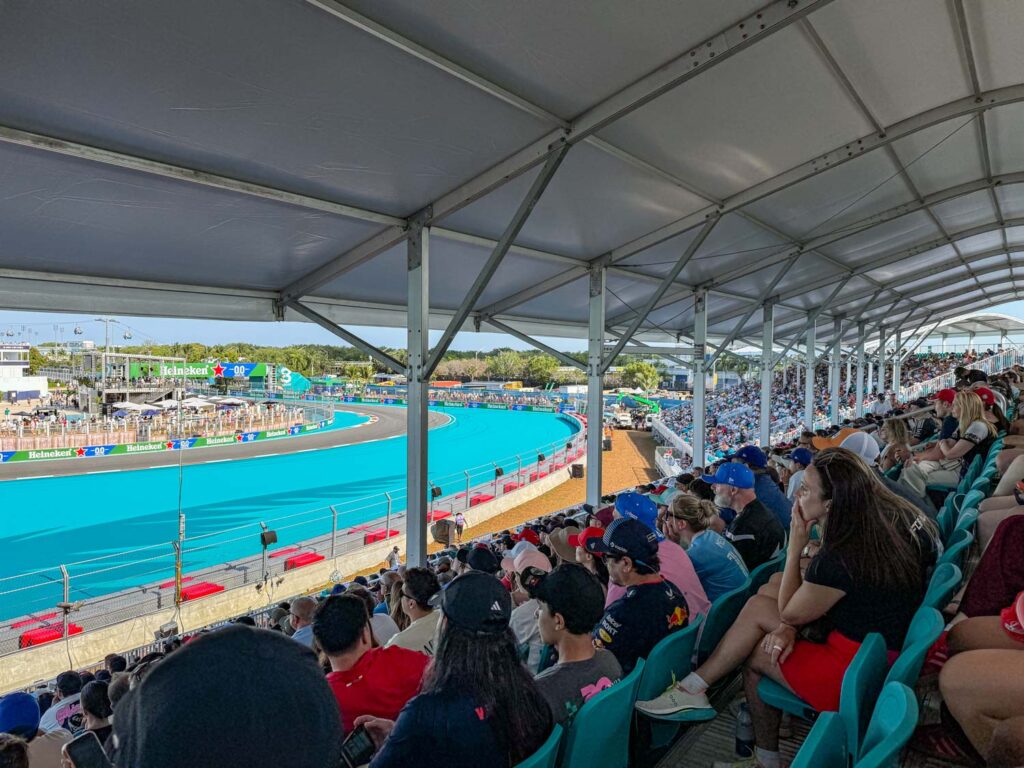
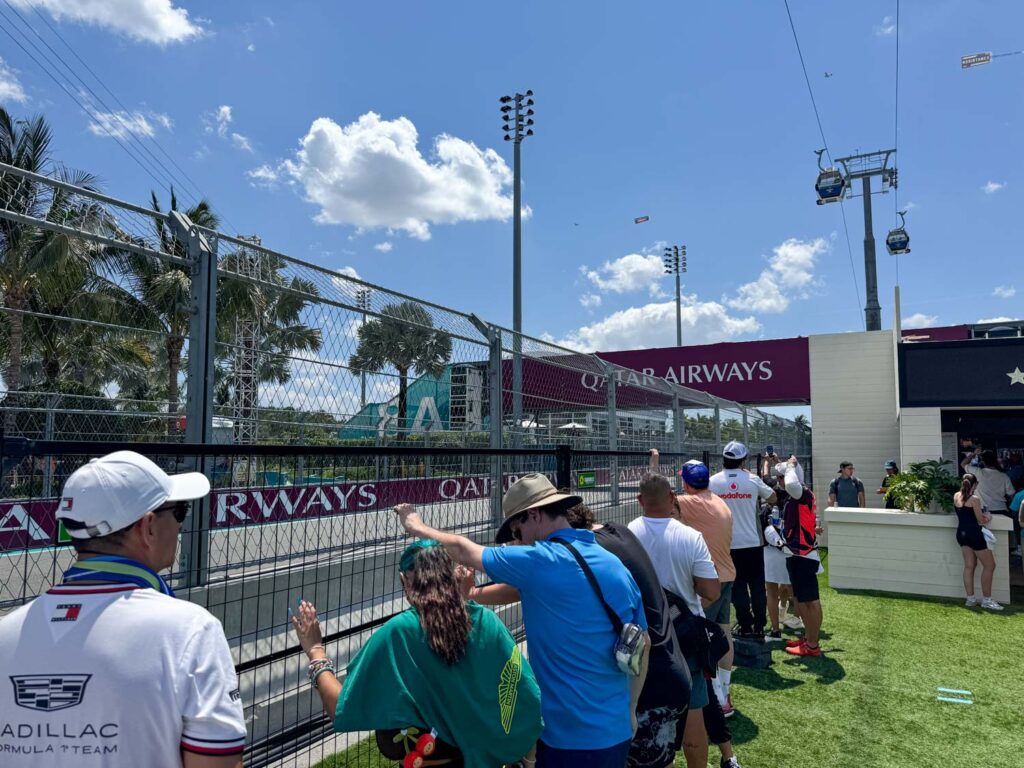
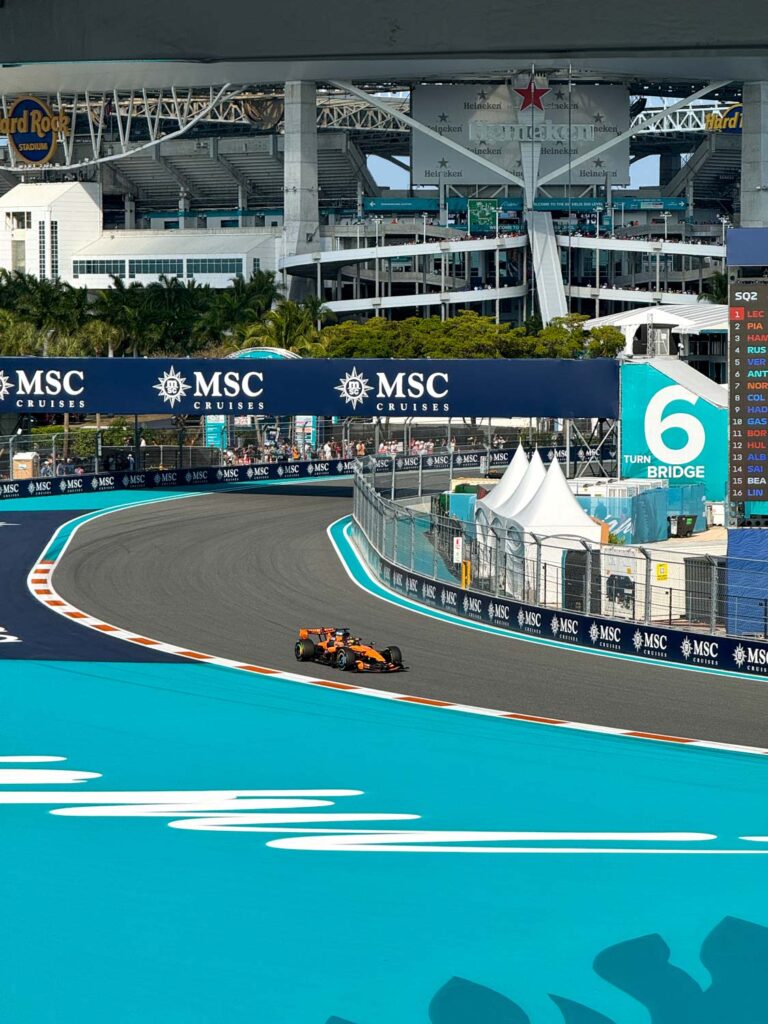
Don’t sleep on the Grandstand Pass here. I think it’s probably the best option, as it allows you to get 3 different views across the 3 days of race weekend. This is what I did in Miami; we were at the Marina Grandstands on Friday (we were between turns 6 and 7), the Turn 18 Grandstand on Saturday, and the Turn 1 Grandstand on Sunday — all excellent views!
How early to buy Miami tickets?
Unlike some F1 races where the tickets sell out immediately, you can usually find tickets for Miami even if you don’t purchase them right when they drop. If you have your heart set on a specific grandstand or hospitality experience, then definitely book those as soon as tickets are available (tickets for the Miami Grand Prix usually go on sale about 9 months in advance; they went on sale in August 2025 for the May 2026 race), but otherwise it’s probably okay to wait.
And if you want just a Campus Pass, those don’t go on sale until closer to the race (in 2026, they went on sale in April for the May race).
3. Choose your grandstand seat carefully
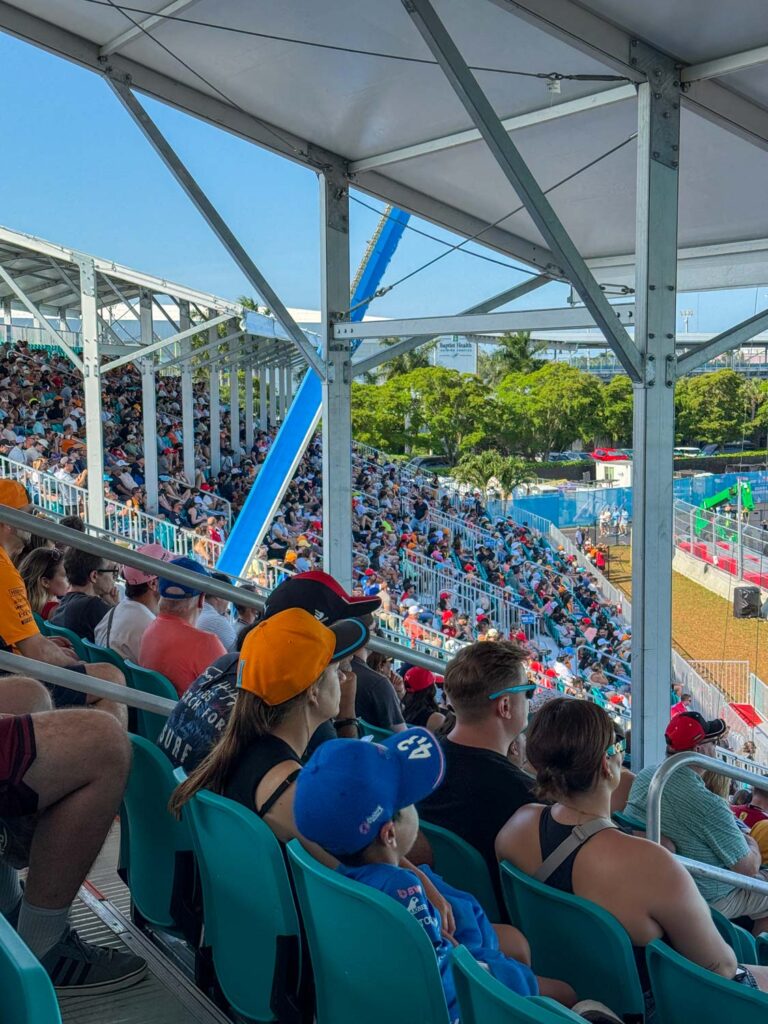
Miami in May can be a complete mixed bag when it comes to weather, so definitely prepare for just about anything.
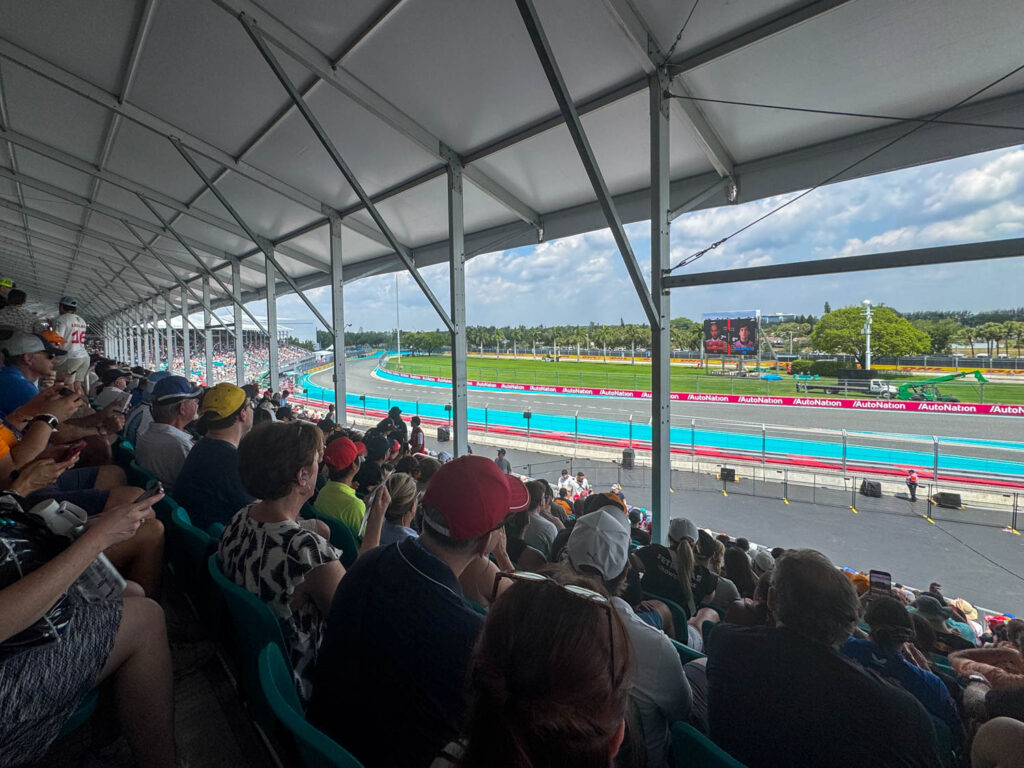
When it comes to choosing where to sit (especially if you’re choosing a grandstand), keep in mind that not all rows in every grandstand are covered/shaded. Most grandstands at Miami do have a roof, but they only cover from about the 15th row up. So if you really don’t want to be sat in the blazing sun or pouring rain, I would perhaps avoid the first 15 rows or so in every grandstand (i.e. the rows closest to the track).
Sitting higher up in the grandstand usually gives you a better view of the cars anyway, though note that the roofs on the grandstands might slightly block your sightline the higher up you are, and it will be harder to see any large screens from further back.
4. Prepare for the HEAT
I cannot stress enough how HOT it’s probably going to be in Miami. Early May is basically early summer in southern Florida, and temperatures above 80 degrees F (26/27 degrees C) are the norm this time of year.
And sure, 80 degrees might not *sound* that hot, but when you factor in high humidity levels and a very strong sun, it usually feels much hotter. (In 2026, the temperature on Saturday was actually 93 degrees F/34 degrees C, and the whole area was under a heat advisory.)
Please please please come prepared to deal with the heat. Wear light and breathable clothing, carry some sort of personal fan (this one is my go-to), and be prepared to spend money on cold drinks.
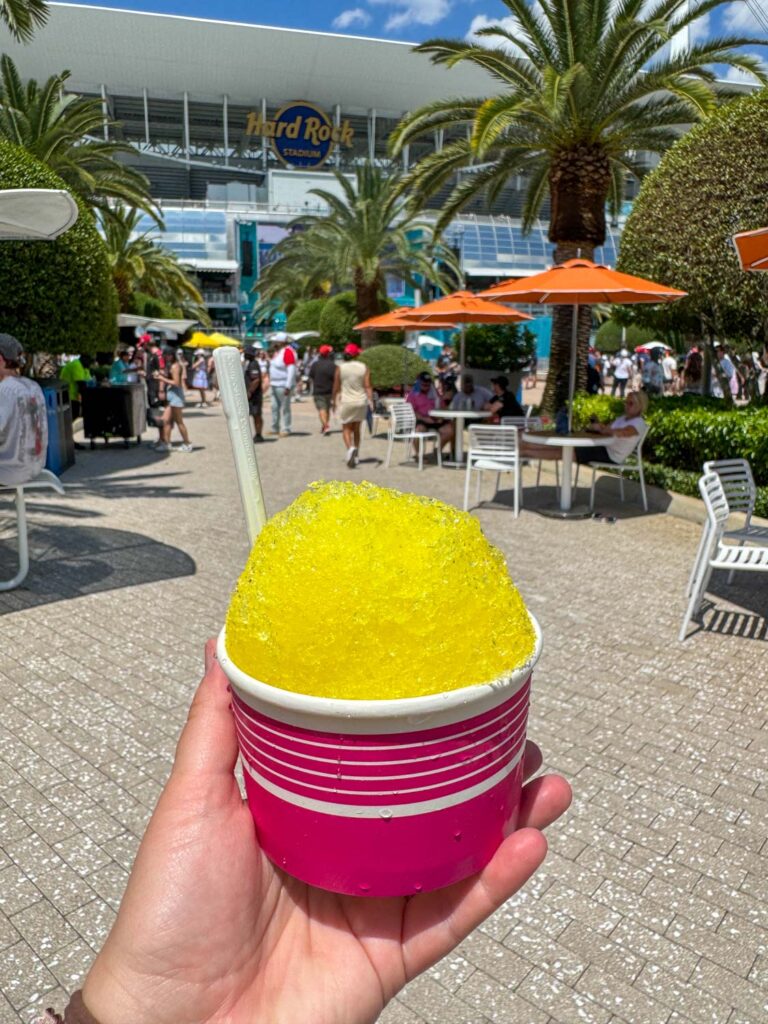
Yes, Miami offers a good amount of free water refilling stations, but on really hot days the water dispensed from these is lukewarm at best. Thankfully there are tons of little drink carts all around the circuit selling ice-cold water, beer, and sports drinks (I drank a ton of Gatorade!). Is it annoying to spend $7 on a bottle of water? Yes. But being able to hold that ice-cold can to the back of your neck is worth it.
I also came prepared with a hat, extra sunscreen, a cooling towel (that I mostly just used to mop up sweat), and some chewable electrolyte tablets (I really like these Zaca tablets). I tested out some instant ice packs, too, but these really weren’t effective or helpful for me.
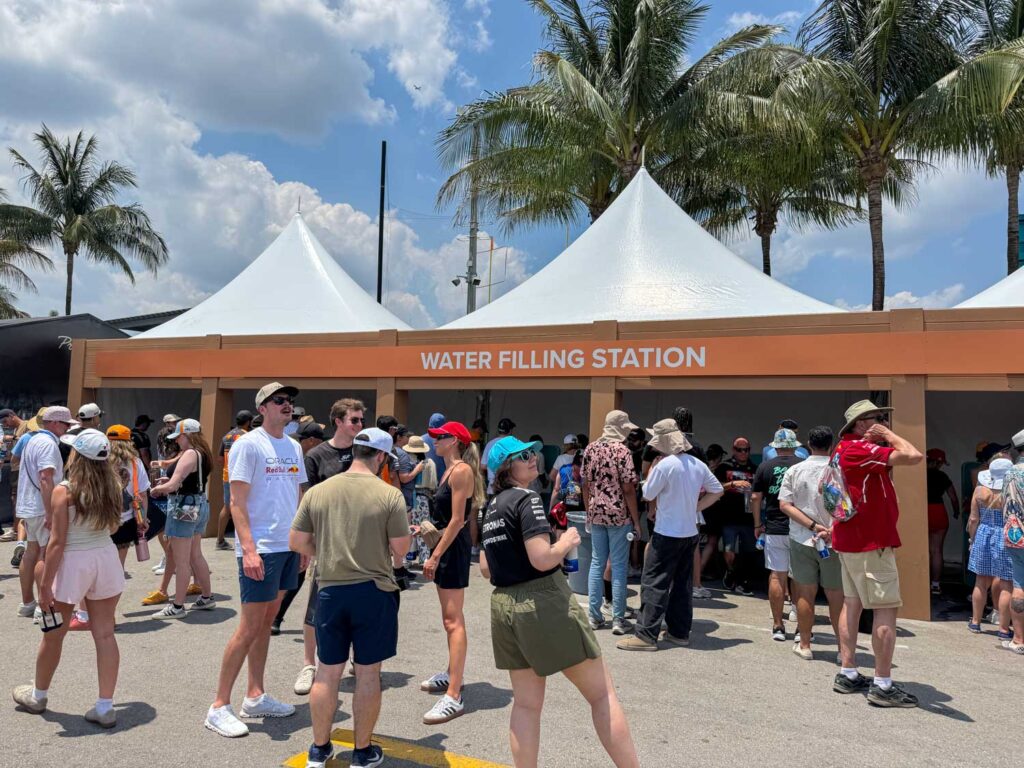
As someone who is mildly heat intolerant, I’m not gonna lie: there were portions of my Miami F1 weekend that I would classify as “Type 2 fun,” where I was actually quite miserable at the time, though now when I look back on it I can see the positives and be glad that I went.
5. Dress for comfort (and porta-potties)
The Miami Grand Prix is definitely a “see and be seen” sort of race, so more power to all the people who get decked out in their designer duds to head to the circuit. However, unless you are going to be in air-conditioned hospitality for most of the day, I would really caution you to dress for comfort first!
Like I said above, it’s likely to be HOT at the Miami circuit. You’re also going to be doing a ton of walking (even just from the parking/drop-off lots), and will potentially be spending a good amount of time in the sun.
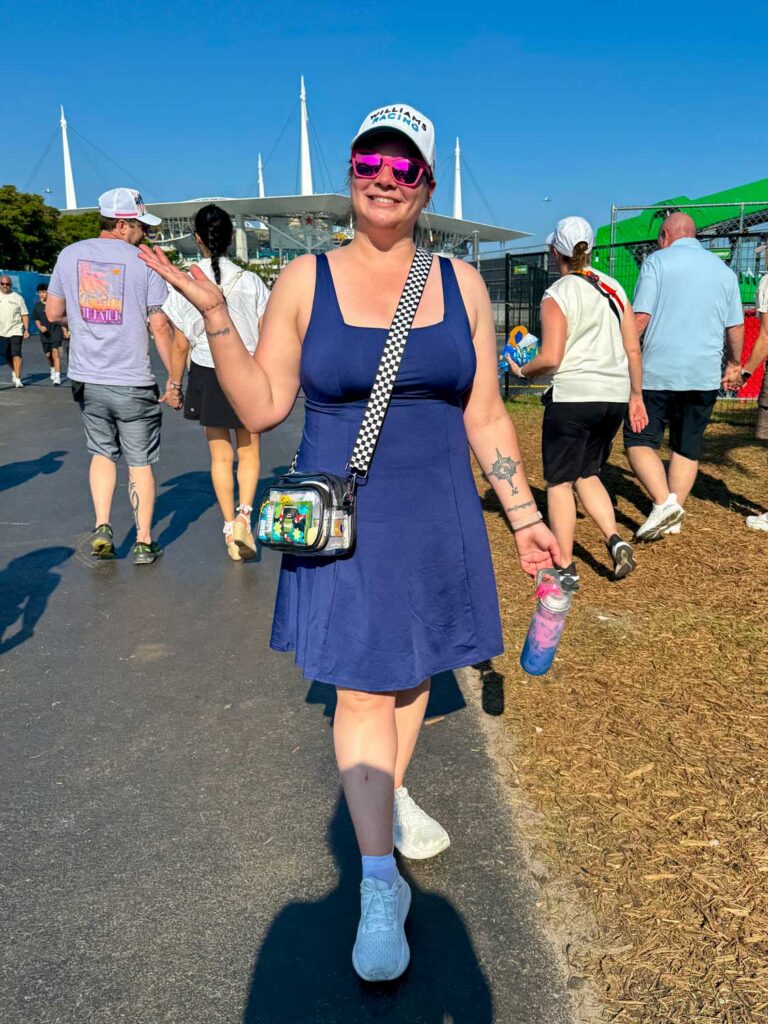
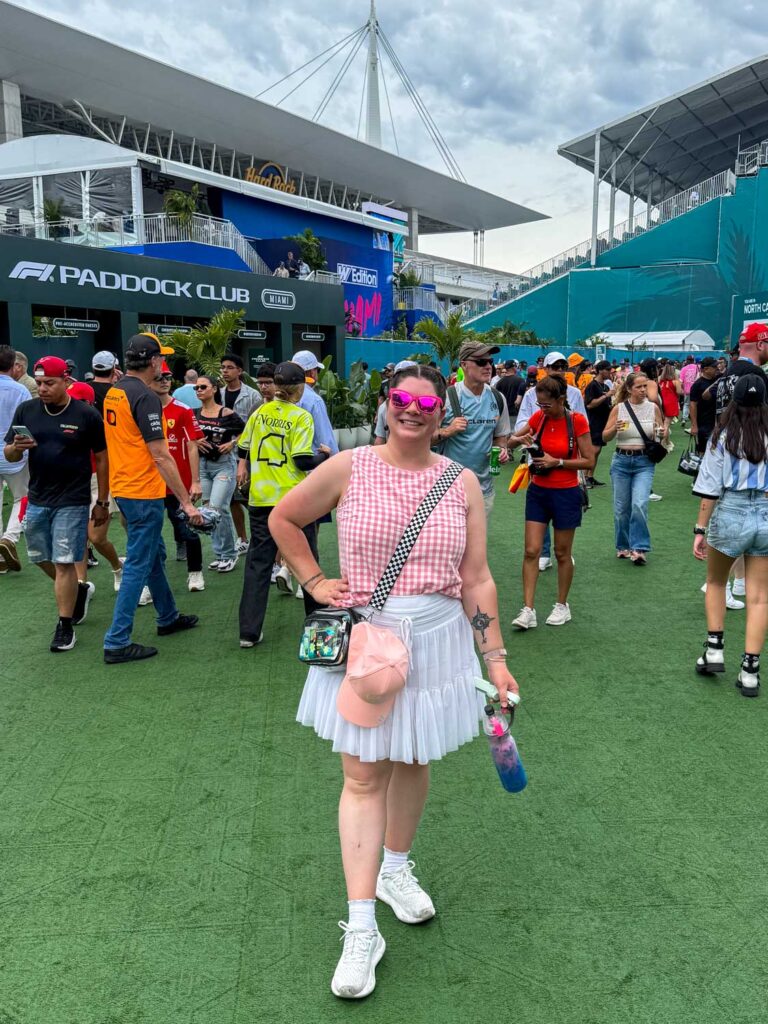
I personally went for athletic wear for the weekend: athletic skirts with built-in shorts (I’m obsessed with my Popflex skorts), and tank tops with built-in bras so I didn’t have to wear one single layer more than absolutely necessary. I also wore my comfiest Brooks running shoes, and brought a baseball cap every day.
RELATED: What to Wear to a Formula 1 Race: Your Ultimate F1 Outfit Guide
Also keep in mind that, since the Miami International Autodrome is a temporary circuit, the restroom facilities are also mostly temporary; i.e., porta potties. So if you’ve got a campus pass or grandstand tickets, just know that you’ll be using a porta potty when you need to go! (This won’t mean much to the men, but for the ladies it might make you think twice about that romper or long flowy dress.)
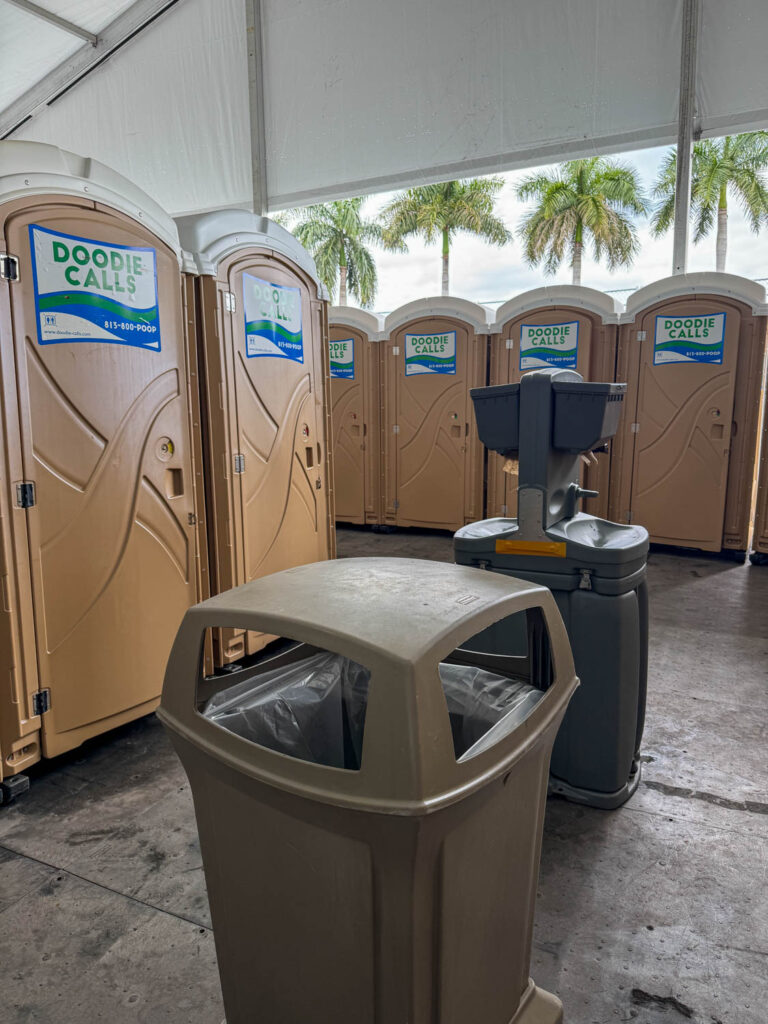
PRO TIP: There ARE some “real” restrooms at the Miami circuit if you go up into Hard Rock Stadium (which is free for all ticket-holders). The bathrooms in there generally didn’t have super long lines, and they at least have more space and real toilets!
6. Make a plan for getting to the circuit
You definitely want to have a solid plan for how you’re getting to the circuit — and then perhaps a Plan B, too.
Since the circuit is set up around an NFL stadium, the good news is that there’s lots of parking available. You *can* drive yourself and park at the race, and there are 25+ different parking lots available — you just need to purchase a parking pass in advance (and then be prepared to take a parking shuttle or walk a bit to the actual track).
You can also reach the track via rideshare like Uber or Lyft, though the circuit itself advises to keep in mind that surge pricing will definitely be in effect. If you opt to arrive/leave via rideshare, there are dedicated off-site lots where you’ll need to be dropped off/picked up from. From those lots, you can either walk to the circuit, or use free shuttles that will run between some off-site lots and the circuit. You can check out this rideshare page for tips on which lots to use.
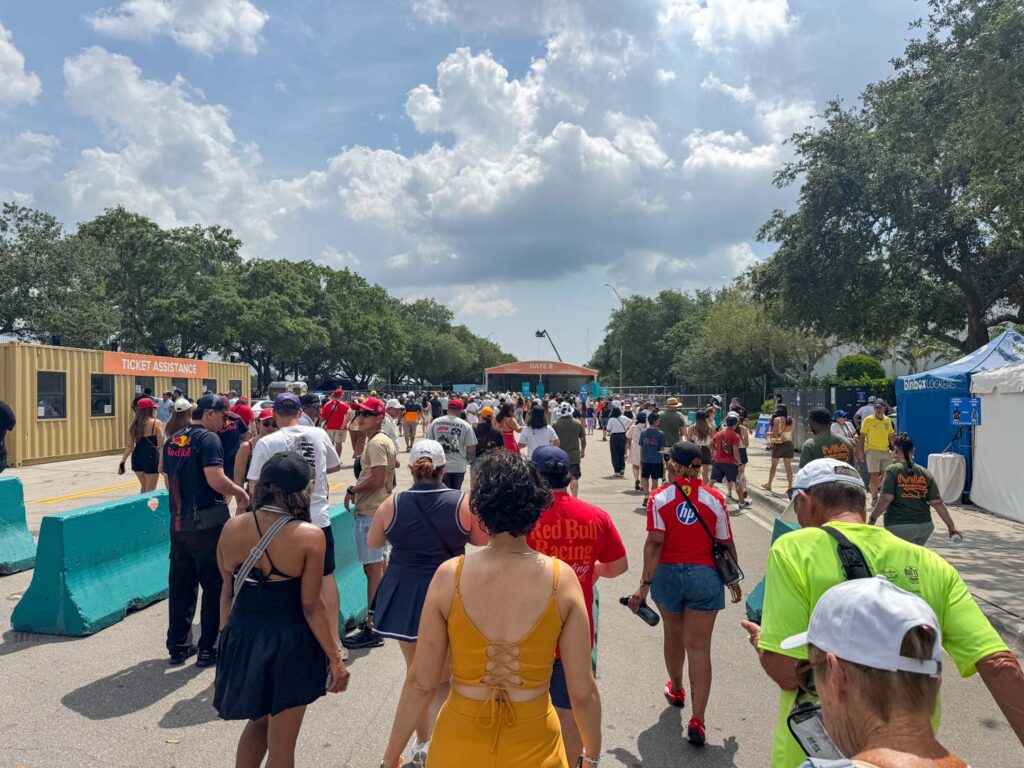
Note: Keep in mind that if you plan to drive or catch a rideshare, you’ll want to allow plenty of extra time to get to the circuit to account for traffic. Even though your hotel may only be 20 miles away from Miami Gardens, Miami traffic can be a nightmare at the best of times. And on race weekend? Expect that drive to take at least 1 hour, but possibly more.
The last option is to use public transit, including the Brightline train which runs the length of Florida. In Miami, you can take the Brightline from Miami Station (close to downtown Miami and South Beach) to Aventura Station. From there, complimentary shuttles will be running to the track (departing 10 minutes after the arrival of each train). (You’ll want to book Brightline tickets in advance.)
(Or, if you opt to stay in Aventura, you can catch the free shuttle from there!)
7. Know what you can/can’t bring
The Miami Grand Prix is one of the strictest on the calendar (in fact it may be THE strictest) in terms of what you can/can’t bring with you to the circuit.
Miami Grand Prix bag rules
The Miami International Autodrome has a strict bag policy that follows the policy for NFL stadiums in the US.
The ONLY bags that are permitted at the Miami GP include:
- A clear, plastic bag smaller than 12″ x 6″ x 12″
- Small bags/fanny packs (not clear) that do not exceed 4.5″ x 6.5″
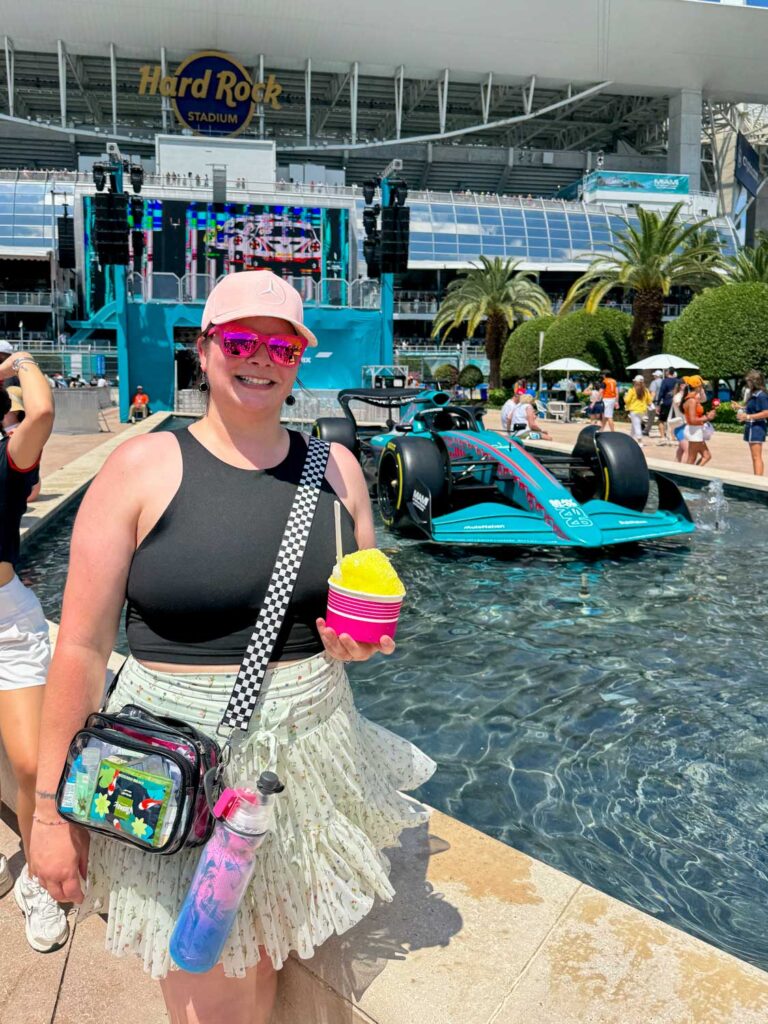
So you can basically bring a small belt bag or wallet smaller than a phone, OR a clear bag up to 12″ x 6″ x 12″. ALL bags larger than 12″ x 6″ x 12″ are banned, and non-clear bags larger than 4.5″ x 6.5″ are also not allowed. I brought this clear purse (with a fun checkered strap) to the Miami GP, and easily fit everything I needed into it.
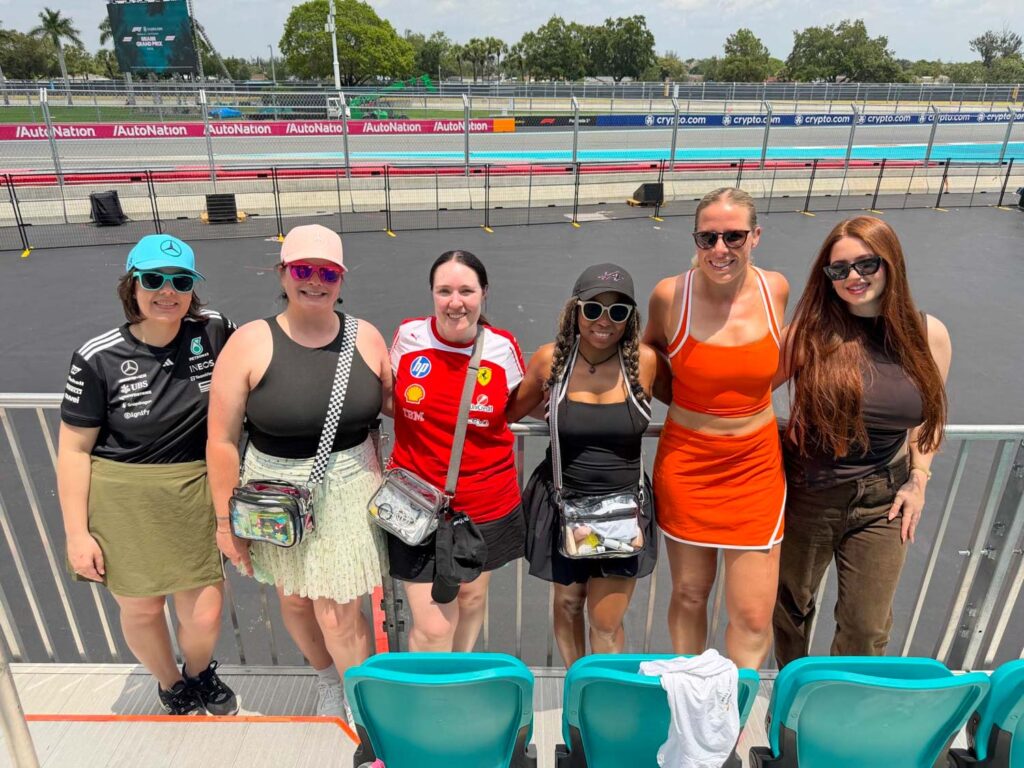
If you bring a bag that is too big or doesn’t follow the bag guidelines, there will be Guest Experience Bag Checks available near Entry gates 3, 5, 8, and 14, with the fee dependent on the size of the bag.
Now, might you run into a security guard who will let you in with a bag larger than those dimensions? Yes. I definitely saw people with non-clear bags that were clearly bigger than 4.5″ x 6.5″, but it often just comes down to how strict the one security guard you encounter decides to be. To be safe, I would just bring a bag that fits within the size requirements!
Things you CANNOT bring to the Miami GP include:
- Alcohol and/or drugs
- Weapons of any kind
- Tobacco or vaping products (no smoking allowed)
- Bags that don’t fit the bag policy
- Glass or metal bottles (empty plastic water bottles are fine)
- Aerosol cans (including aerosol sunscreens! — they were indeed confiscating these from people at the security checkpoint)
- Coolers
- Cash (the Miami International Autodrome is a cashless venue)
- Selfie sticks, tripods, and monopods
- Video cameras and other pro audio/video recording equipment
- Drones
- Fireworks, flares, smoke bombs, etc.
- Noise-makers (like air horns, vuvuzelas, whistles)
- Tents and canopies
- Umbrellas
- Chairs of any sort (including collapsible ones)
- Seat cushions of any size
- Frisbees, footballs, beachballs or any other items that can be thrown
- Strollers, wagons, bikes, skateboards, scooters, etc.
Things you CAN bring with you:
- Bags that meet the bag policy
- Diaper bags (subject to search)
- Empty plastic or silicone drinking container up to 32 oz.
- Empty Camelbak-type hydration pack with no pockets
- Factory-sealed water bottles 20oz or less
- Non-professional cameras (point-and-shoot and ones with “consumer-grade detachable lenses”)
- Liquid or solid sunscreens (please bring these!)
- Handheld signs that are not offensive
- Binoculars
- Jackets and blankets that you hand-carry in (including rain jackets/ponchos, which you might need in Miami!)
- iPads/tablets smaller than 12″ x 12″ x 12″
RELATED: What to Pack for a Formula 1 Race: Your F1 Survival Kit Guide
8. Don’t just go on race day
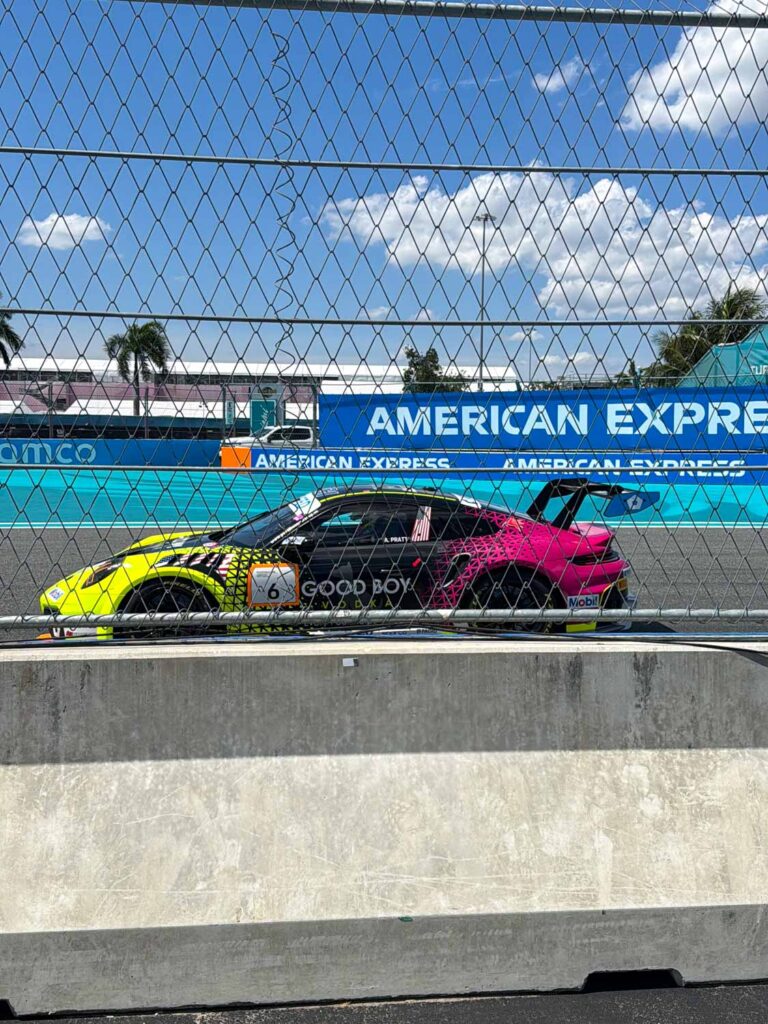
I’ve said this in many posts before, but Race Day is honestly my least-favorite day to be at an F1 circuit! This is always most expensive day to get tickets for, and it’s also the busiest and most stressful day at the track. And I mean, yes, you get to see the race, but I highly encourage you to go at least one other day during race weekend, too!
Saturday (or whatever Day 2 of a race weekend is) is usually my favorite day to be at the circuit. There are support races from other series to watch, fun fan zone activations, and often driver Q&A/interview sessions you can go and see (though I don’t *think* they did any in Miami this past year since the Fanzone setup here is not centralized in one area).
I went all 3 days of race weekend at Miami. On Friday, we pretty much only showed up for sprint quali. On Saturday, though, we were at the circuit basically all day, allowing ample time to watch the sprint race, a Porche Carrera Cup race, and regular F1 qualifying, plus have time to explore all the different campus zones. Which worked out great, since on Sunday the race was bumped up by 3 hours to avoid thunderstorms, so we had less time at the track that day anyway.
9. Allow time to explore the track
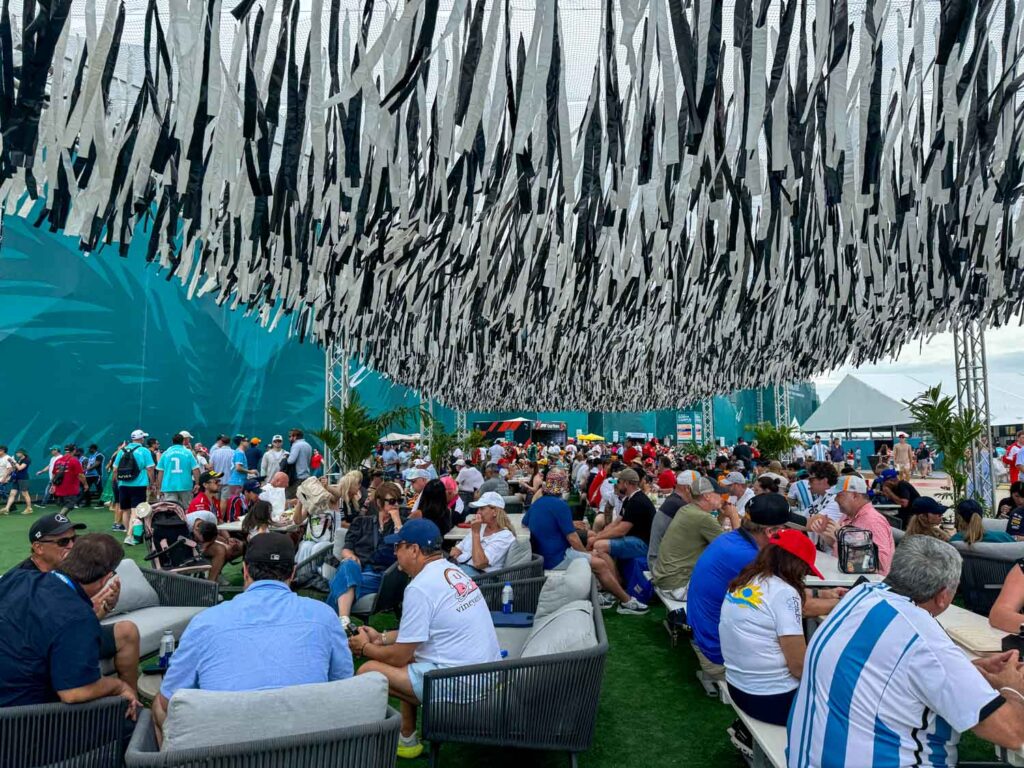
Speaking of the track, the Miami International Autodrome might be a temporary track, but they do a good job of making it unique.
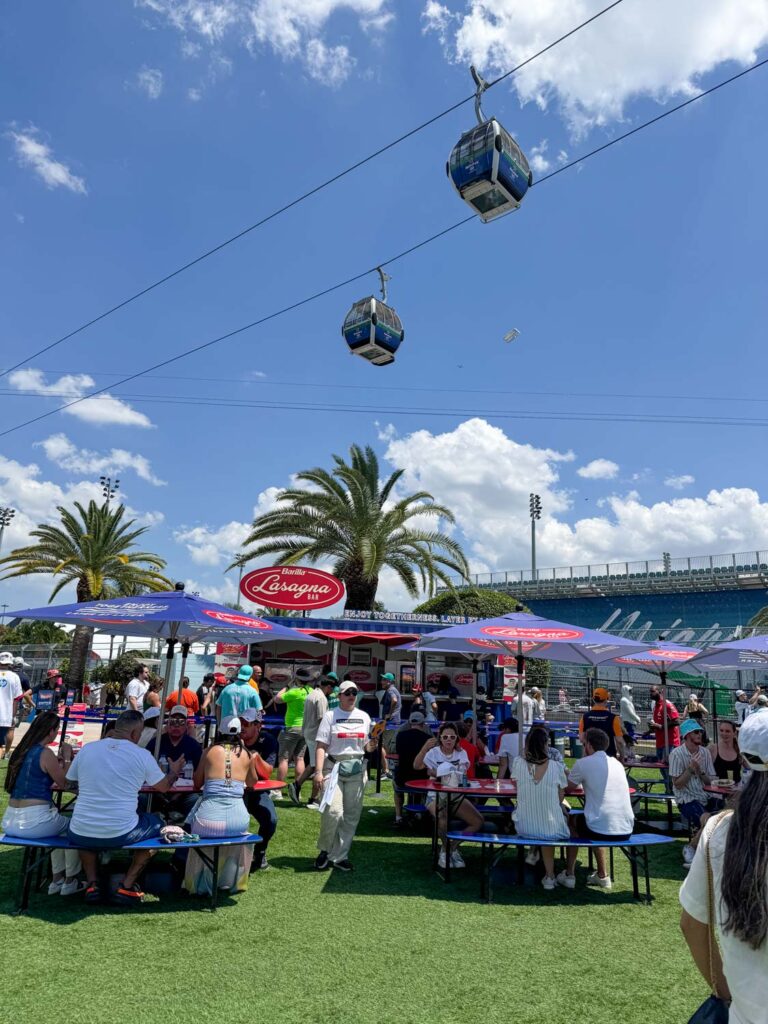
The circuit (or “Campus”) is divided into 8-9 separate zones during race weekend, with most of them being open to all ticket holders. In 2026, each campus zone had a different theme based on different Miami neighborhoods, so the food options, activations, and even decor is slightly different based on where you are around the circuit.
It was fun having time to explore some of the different campus zones — though doing so much walking during a heat advisory on Saturday did make me feel like I was going to pass out a couple times!
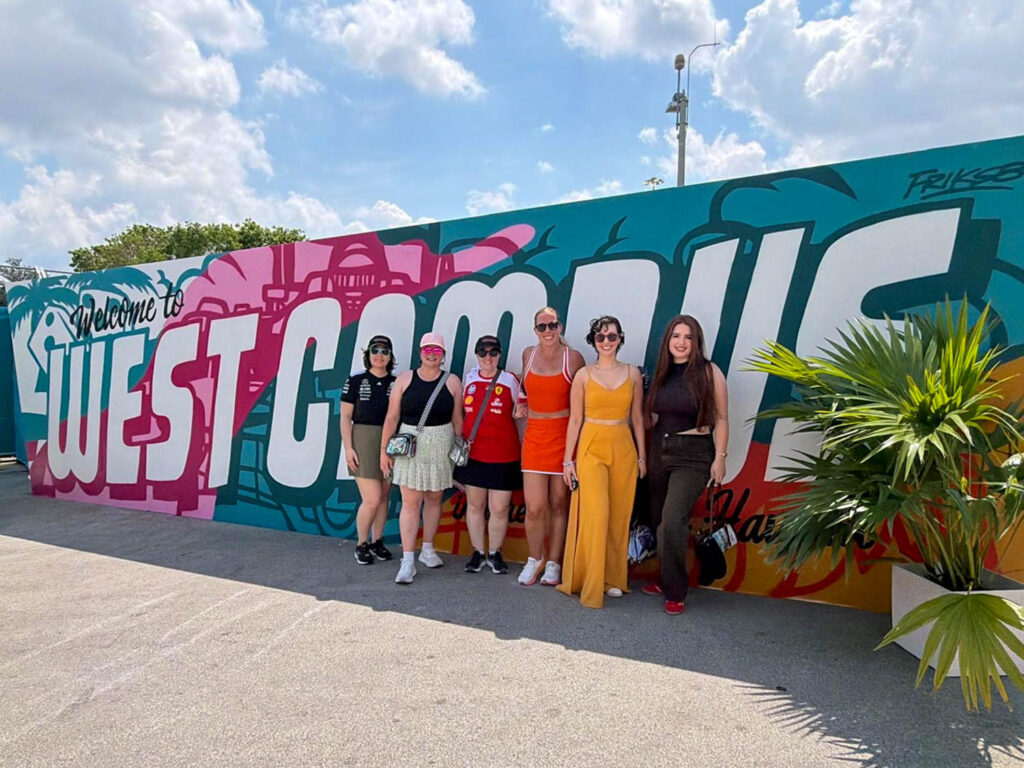
Pro tip: Download the Miami GP app for help getting around the circuit, including an interactive map.
10. Go into Hard Rock Stadium
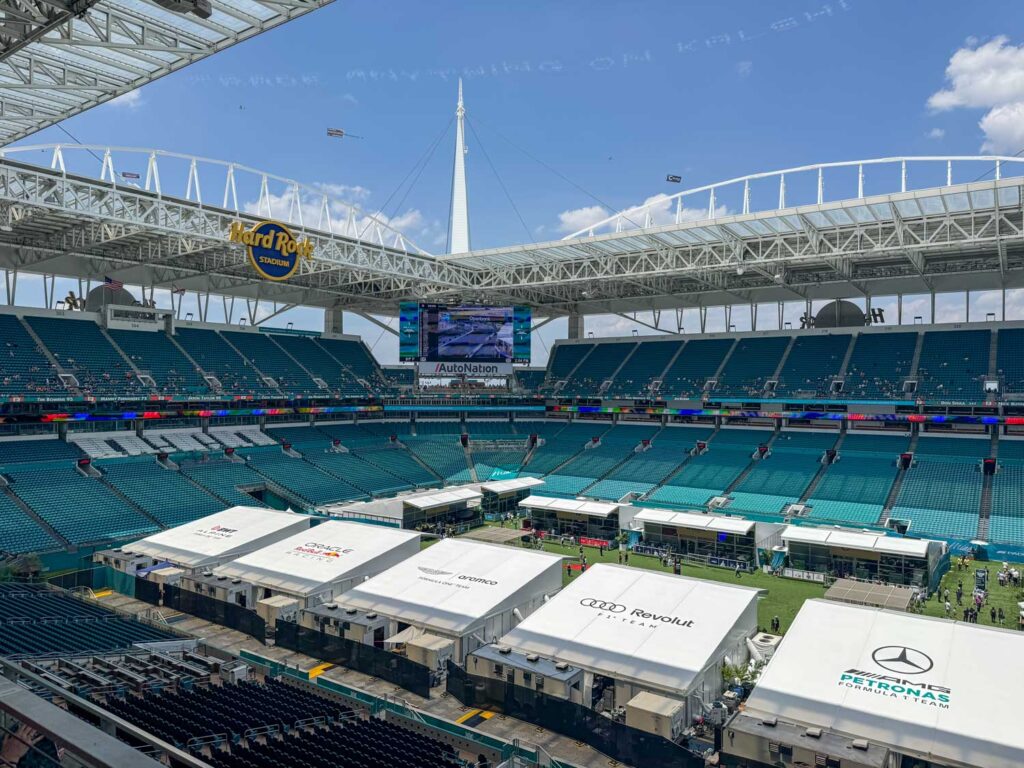
A unique feature of the Miami GP circuit is that it’s built around Hard Rock Stadium, with the F1 paddock (known as the “Team Village” or “Paddock Village” here) actually located inside the stadium. And the cool part is that anyone with a ticket can go up into the top level of the stadium during race weekend and look down into the paddock!
Me and some of the girls I was at the race with went in on Saturday afternoon, and it was honestly one of my favorite spots!
You can access both the interior and exterior parts of the top level of the stadium. They had fan activations (like a pit stop challenge and photo ops) in the exterior spaces alongside picnic tables and big screens to watch the action. They also had concession stands open, so this is where we had lunch.
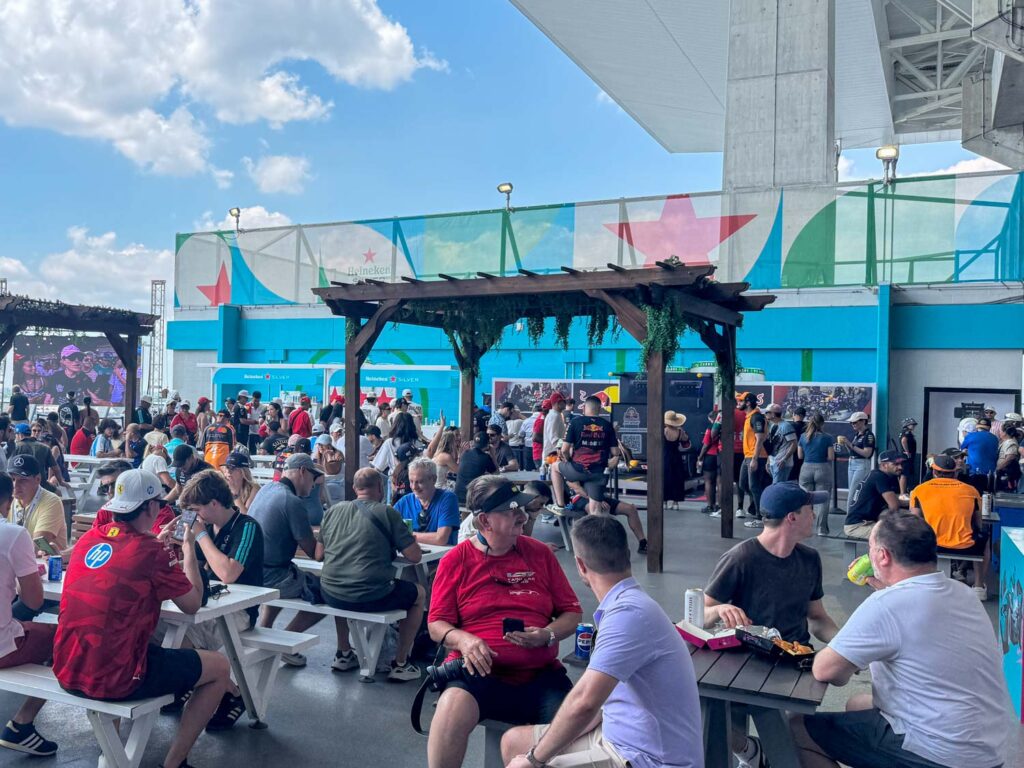
You can also go sit in the stadium seats on the interior side of the stadium that overlook the paddock. There are big screens in here, too, and was mostly shady inside, so it was a nice little respite from the heat.
To get into Hard Rock Stadium, you need to follow the “Stadium” signage. The only entrance is near the helix ramps at the southwest corner of the stadium, near the Turn 4 bridge close to the Promenade and Fountains campus zones.
11. Don’t buy merch at the track
It’s a well-known fact that the team merch sold at the circuit at F1 races is always more expensive than the same merch purchased elsewhere. And this is especially true in Miami, where special edition baseball caps were selling for a staggering $165, and driver-specific hats were in the $125 range in 2026. This is truly crazy, considering you can buy those same hats online for maybe $50-$60.
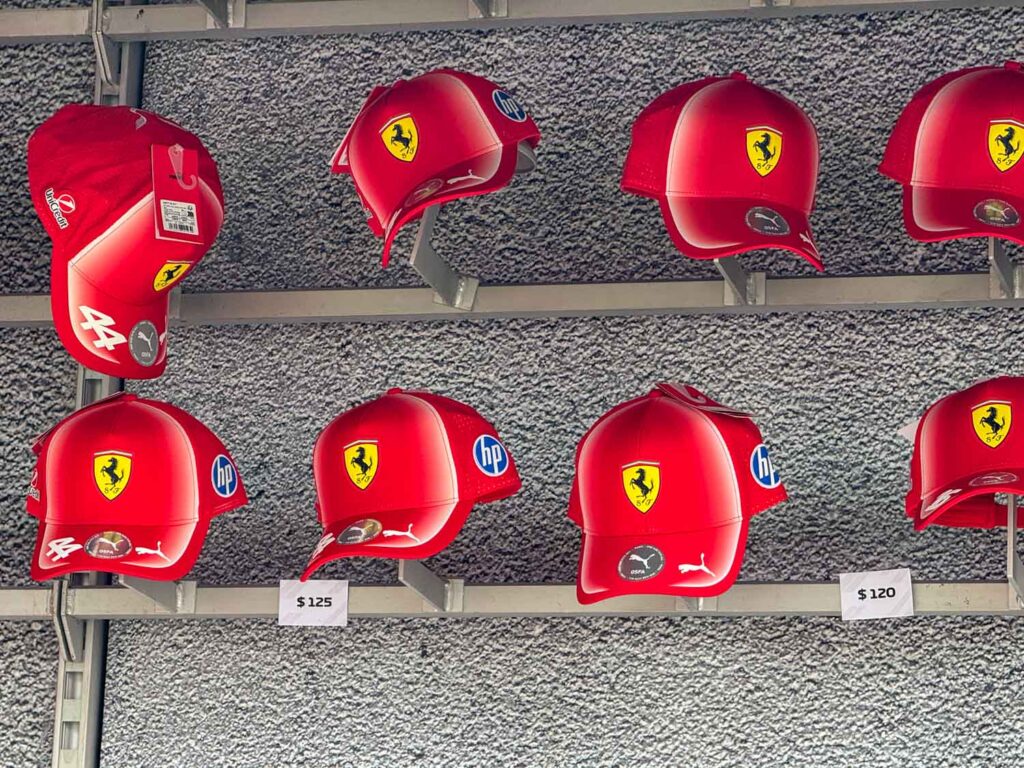
I know that some teams do special liveries and merch for Miami, so I mean, if you have to have it, you have to have it (I get it; I bought the Mercedes Miami hat because I was worried it would be sold out online). But if you’re considering buying just a generic team hat or shirt? Definitely buy it somewhere else!*
*The one exception here is if you can find one of the “F1 Outlet” merch stands, where they sell previous years’ merch for discounted prices. You can sometimes find good deals at those locations!
12. Know it’s not like watching on TV
It’s important to know that going to an F1 race in-person is nothing like watching a race on TV. The vibes are electric, but the actual experience of watching the on-track action can vary wildly.
When you watch a race broadcast on TV, you see the entire race. Cameras capture every angle of every lockup, breakdown, and battle for position, and announcers give you context for what’s going on. In person, though, you often only see a very small snippet of the action when it happens in front of you — and the cars are going so fast that they’re literally just a blur!
Many of the Miami grandstands DO have views of large screens, but there’s no guarantee you’ll have a clear view or be able to hear the commentary.
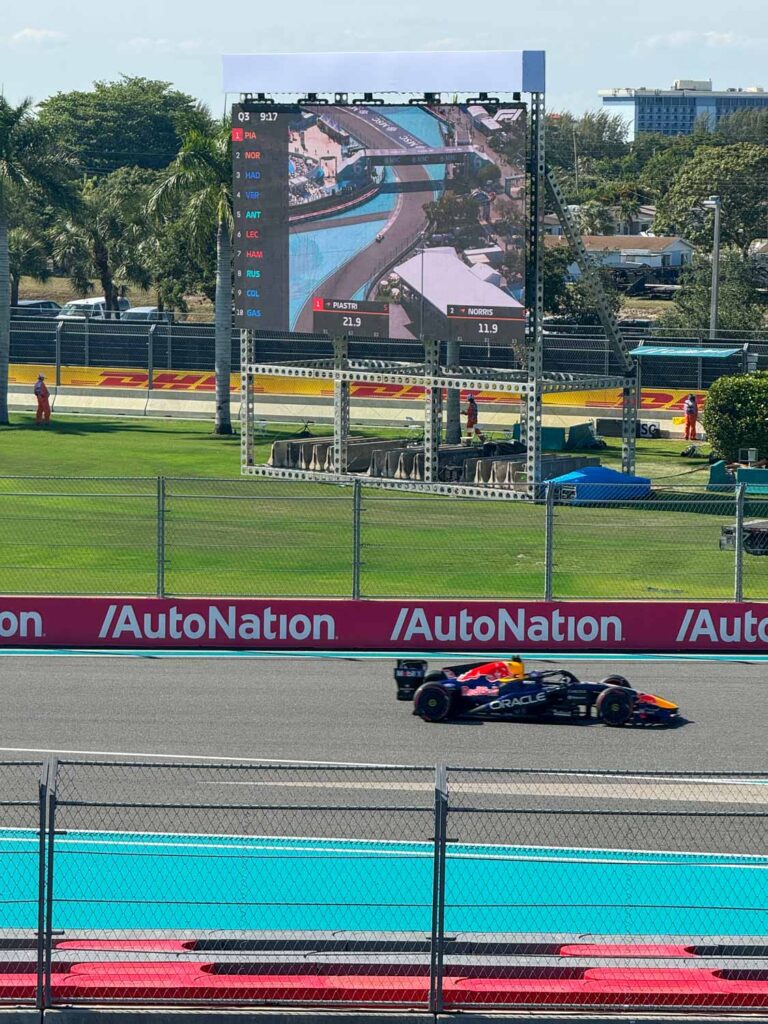
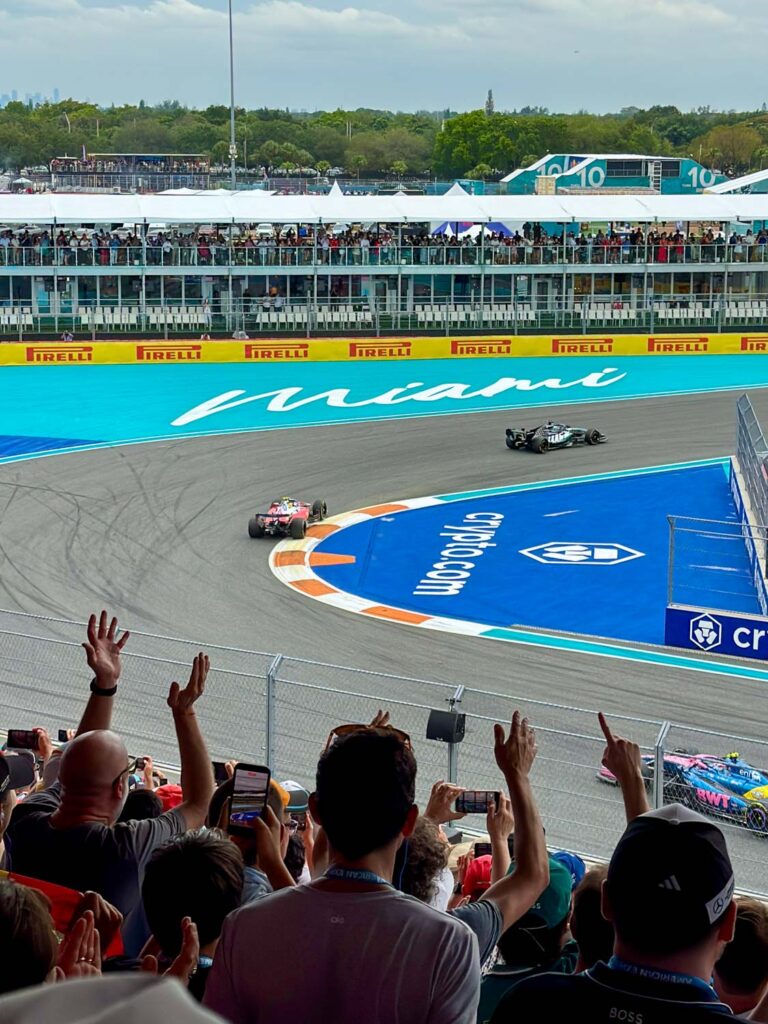
You might also end up in a grandstand like I did on Sunday where everyone in front of me decided they needed to stand up every time Max Verstappen made a move around Turn 1 (which felt like almost every lap), meaning that I also had to stand up to be able to see anything. I’ve never experienced this at any other race, though, so hopefully it’s just a Miami anomaly — but it did make the race-viewing even more frustrating.
Just know that attending a race in person is more about the overall experience rather than solely watching the race.
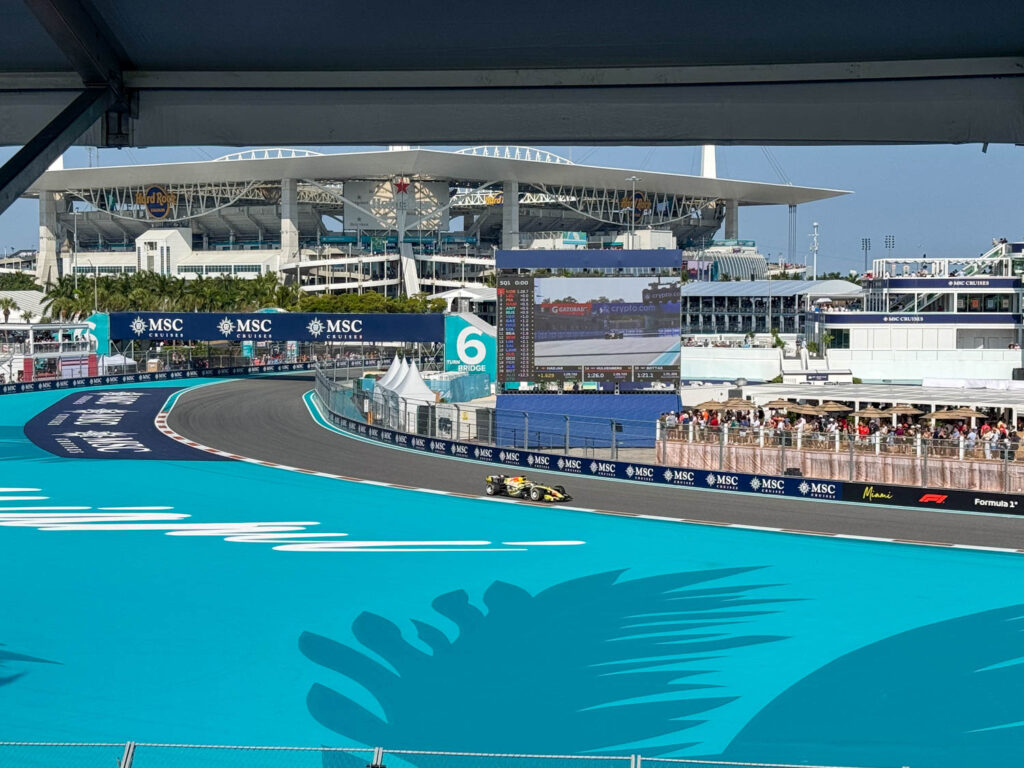
A pro tip: If you are an AMEX cardholder of any sort, bring that AMEX card with you to the race. You can show it to pick up a free F1 radio to use during the race, which is an excellent way to listen to live commentary in case you aren’t near one of the big screens.
13. The lines are (mostly) not bad
I have to give the Miami International Autodrome its flowers here, because I’ve been to other circuits where getting food or using the restroom pretty much automatically means standing in a very long line. But it’s not necessarily that way in Miami!
There WILL be lines sometimes in Miami. But, in my experience, the worst lines and bottlenecks were mostly at the entrance gates on Race Day, and after the on-track action ended and everyone was trying to leave the circuit at the same time. Otherwise, the Miami campus concept does an excellent job of spreading people out around the circuit.
Even on Race Day (when the largest number of people are at the circuit at the same time), I did not wait in line to use the restroom, fill my water bottle, or buy a cold drink from a cart vendor. I did wait in a brief line to get food at one of the food courts, but it was like a 5-minute line, not an hour.
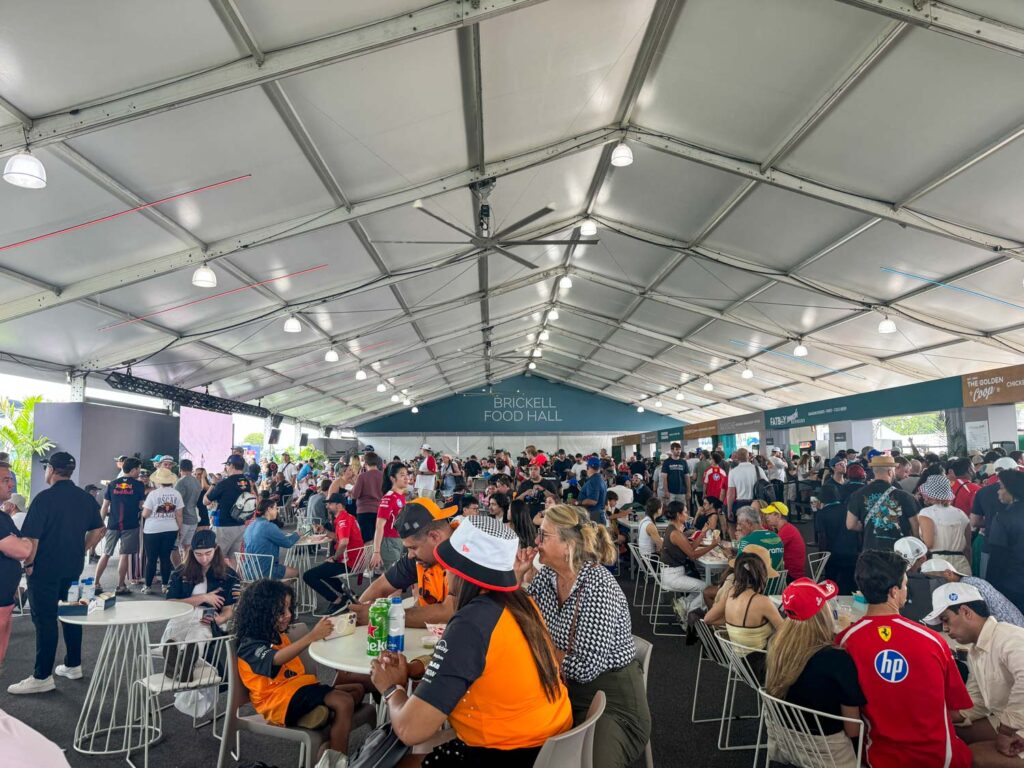
My experience won’t be the same as everyone else’s, but I found the lack of hours-long lines to be true across different campus zones throughout the Miami race weekend. So kudos to Miami for getting this right!
14. Don’t expect to see drivers
Unlike at many other circuits, Miami does not have one centralized official Fanzone area, and therefore doesn’t have a singular stage for performances, driver interviews, DJs, etc. So unless you have paddock access, your chances of seeing drivers up close at the circuit are basically zero.
You might spot other celebrities around the campus, but there are no driver Q&A sessions or areas where you can hang out and watch people arrive to the paddock.

Your best bet of driver-spotting in Miami is to attend some of the team-specific fan zones away from the circuit, where there are sometimes driver appearances in the days leading up to Race Day (so like Thursday-Saturday).
(You also could luck out and be staying at the same hotel as a driver if you book a 5-star property in Miami, but this isn’t guaranteed and I never promote stalking drivers around their hotels.)
15. Don’t skip the other Miami fun
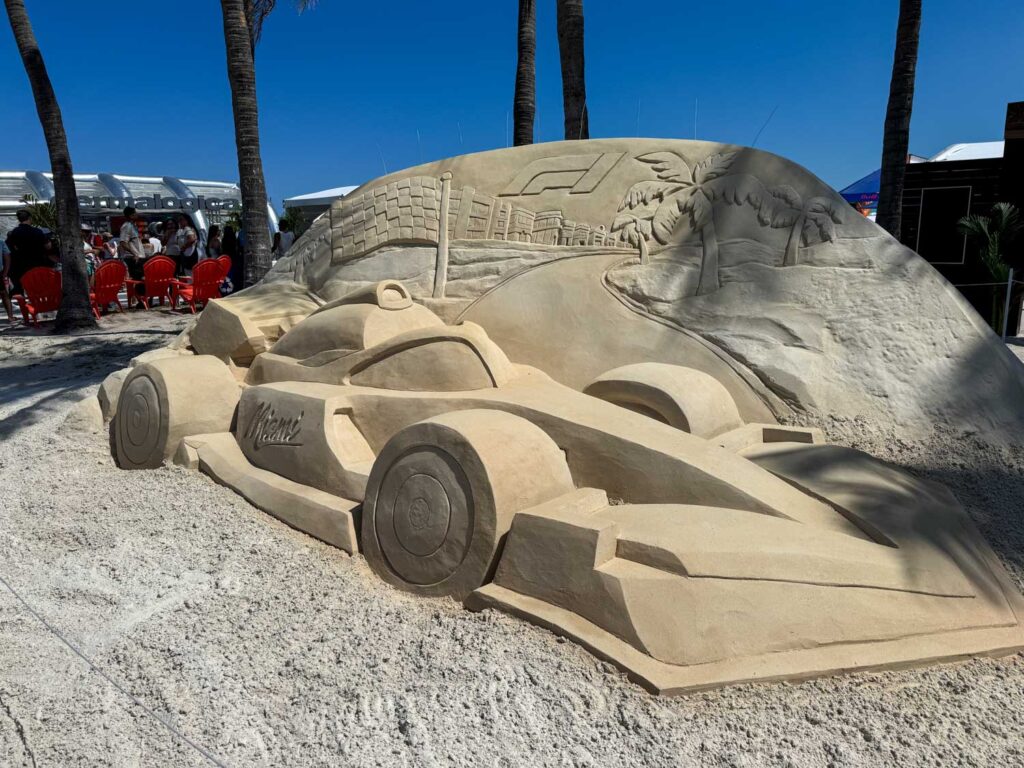
Most F1 teams go pretty big in Miami, and there are lots of F1-related events around race weekend.
In 2026, Esses Magazine held a car show party, Susie Wolf did a stop on her book tour, and several teams had pop-ups and special fan zones.
Miami also does its own large (and free) Fan Fest on South Beach, which this year included things like brand pop-ups, racing sims, live on-stage interviews with drivers, a champagne garden, DJ sets, show cars on display, and more.
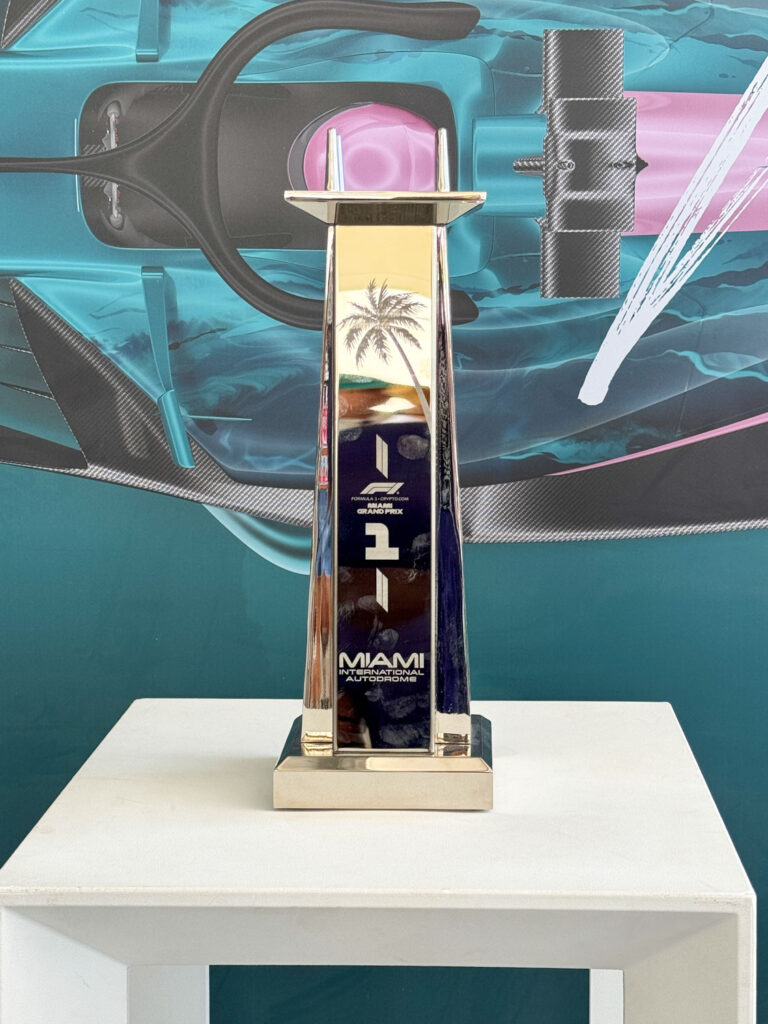
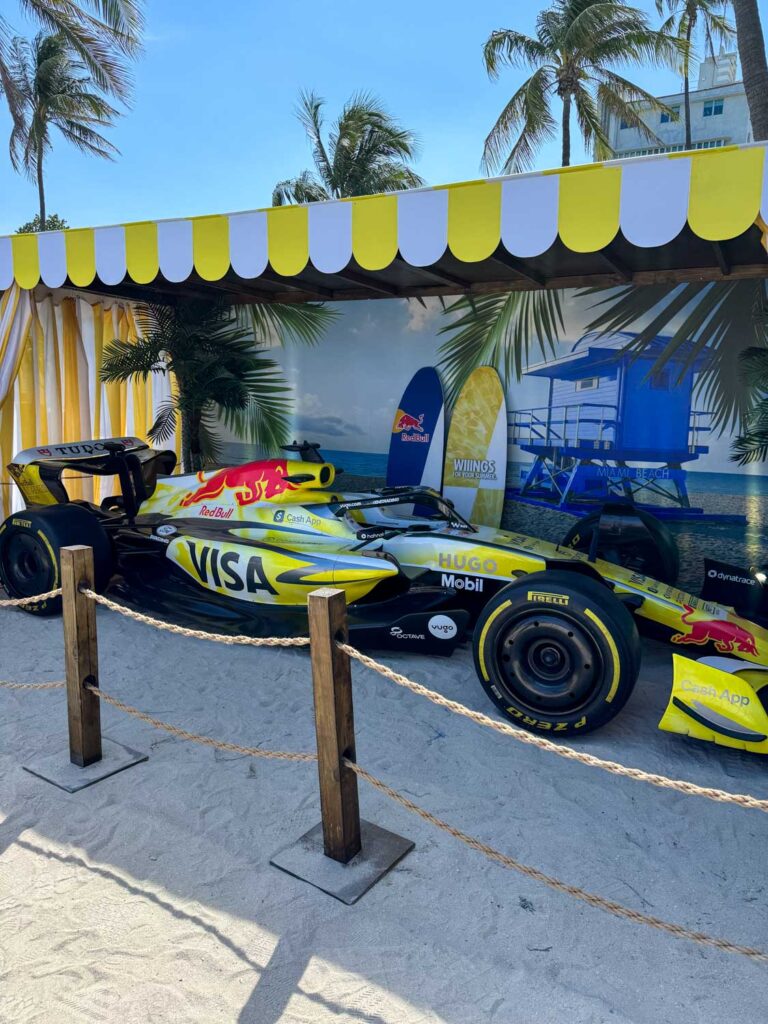
And there’s also the Racing Fan Fest set up at Wynwood Marketplace, which also has immersive activations, food trucks, driver appearances, and more. (In 2026, Williams had a dedicated fan zone here, too.)
Miami is always a party, but even more so over F1 weekend.
Overall, I’m glad I went to the Miami Grand Prix, and I hope this guide can help you enjoy your experience if you end up going, too!
Have you been to the Miami GP? If so, what other tips would you add?
