How to Plan an F1 Trip & Go to Your First Formula 1 Race
So you’ve caught on to the Formula 1 hype. Maybe you’ve binged all the drama of “Drive to Survive” on Netflix; maybe Brad Pitt drew you in in the F1 Movie; maybe you’ve just gotten caught up in the glitz and glamour of F1 on social media; or maybe you’ve been a fan forever!
Regardless of what piqued your interest, I’m here to answer the question that’s now on your mind: how can I actually go to an F1 race and see it for myself?
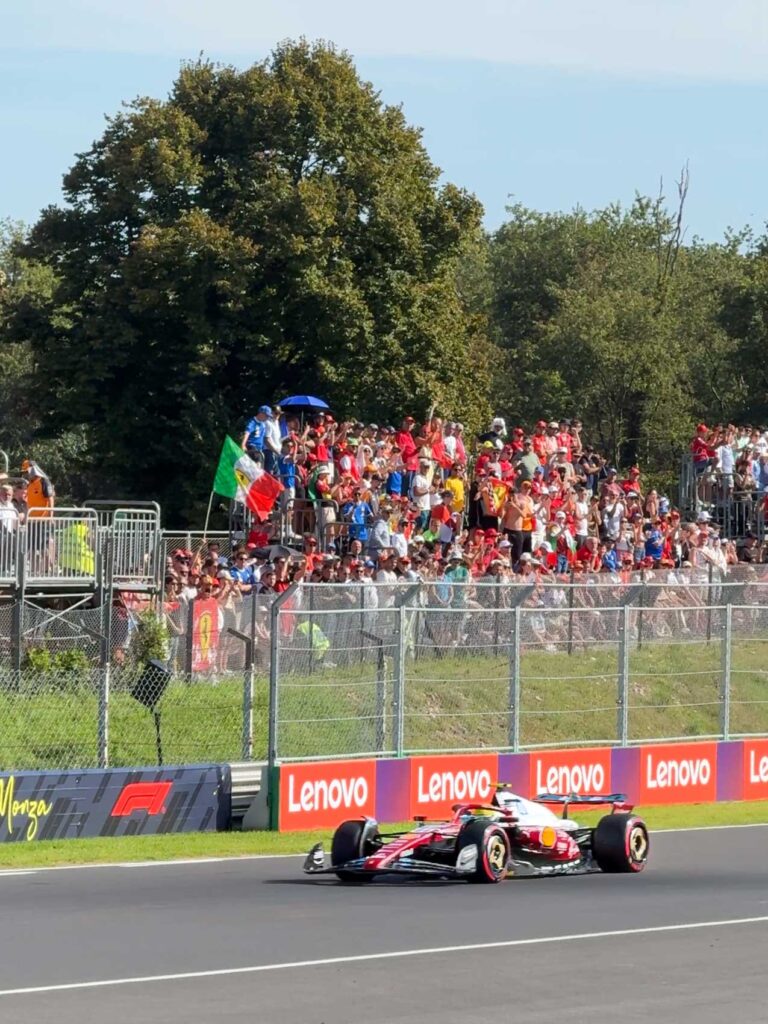
Formula 1 is a pretty unique sport in that there are (as of 2026) only 22 athletes competing at this level over 24 races per year, and that’s it. This isn’t a sport like baseball or football where dozens of teams all play lots of head-to-head games throughout a season. You get 24 race weekends per year in F1, and that’s it.
But those race weekends are also spread across 5 continents, meaning if you want to see one, you probably need to factor some travel in, too. Meaning in order to go to an F1 race, you’re gonna have to plan an F1 trip!
How to plan an F1 trip
If you’re a little overwhelmed by where to start planning a Formula 1 trip, I’ve got you. Not only have I been a full-time travel blogger for more than a decade, but I’ve also planned trips to several Formula 1 races and related events.

Read on to learn exactly how you can plan an F1 trip of your own, step by step.
And how far in advance should you start planning your F1 race trip? The FIA usually releases the F1 race calendar around June the prior year. Most people will start planning F1 trips 6-9 months in advance — or perhaps even a year in advance for races that release tickets for next year immediately after this year’s race ends!
Step 1: Pick a race
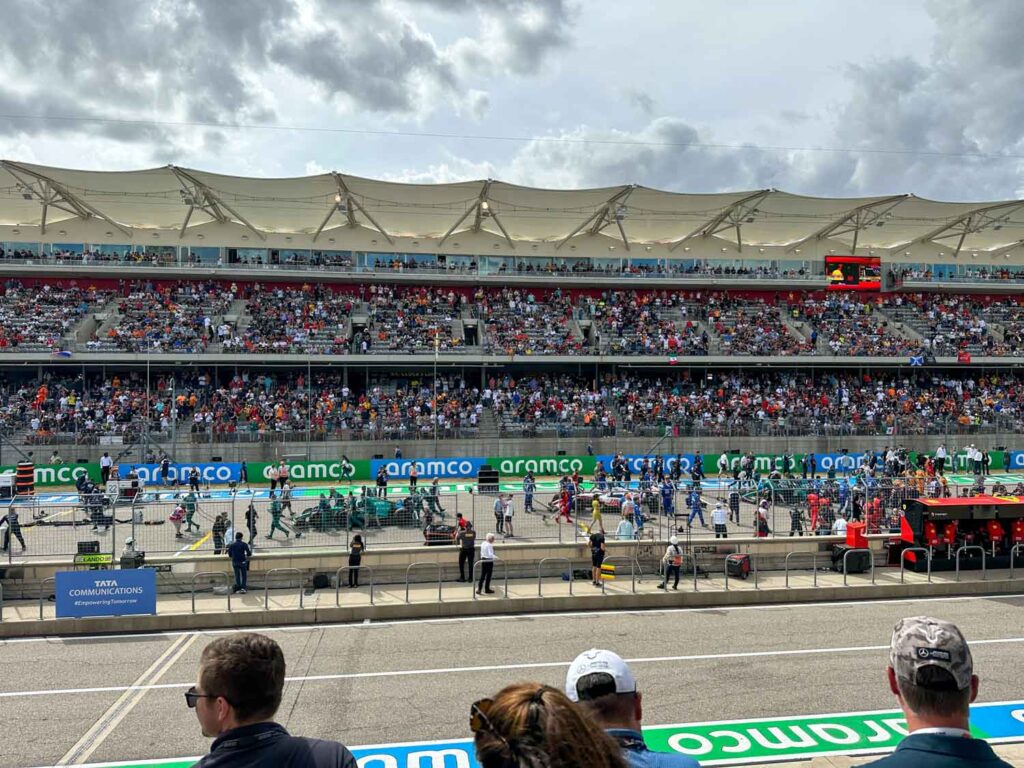
Step 1 in how to go to an F1 race is actually deciding which race you want to attend. There will probably be several factors that go into this decision. (We have a full list of races for this season, in case you’re not even sure where all the races are!)
Some questions you might ask yourself if you’re having trouble deciding include:
- Which race is closest to you / would be easiest for you to get to? – The cost of flights, hotels, etc. definitely should factor into your decision, along with how long of a trip you’d be able to take. It would not be worth it (in my opinion) to fly halfway around the world if you can only spend 3 days there for race weekend.
- Do you have a “dream” Formula 1 race or track? – If you think you’re only ever going to get to one F1 race in-person, then make it your dream race if you have one.
- What time of year can you travel? – If you don’t have a dream race, you might want to base your trip around the time of year it’s easiest/most affordable to take time off for travel. If you’re traveling from the US, the races in Europe in the summer, for example, are going to be more expensive because Europe summer travel is always pricey (and summer temps in Europe tend to be HOT).
- What is your budget? – Yes, some Formula 1 races are more expensive than others. They’re honestly all pretty pricey when you factor in the actual travel required (unless you’re local), but the race tickets themselves can really rocket up in price at some tracks. (China, Bahrain, and Brazil are some of the cheaper races on the calendar, while Monaco and Las Vegas are usually the most expensive.)
Which race you choose might also depend on how easy (or not) it is to get tickets. For example, while China has some of the most affordable race tickets every year, they only go on sale a few months in advance and usually get snapped up almost immediately by local fans.
Step 2: Price out race tickets and hotels
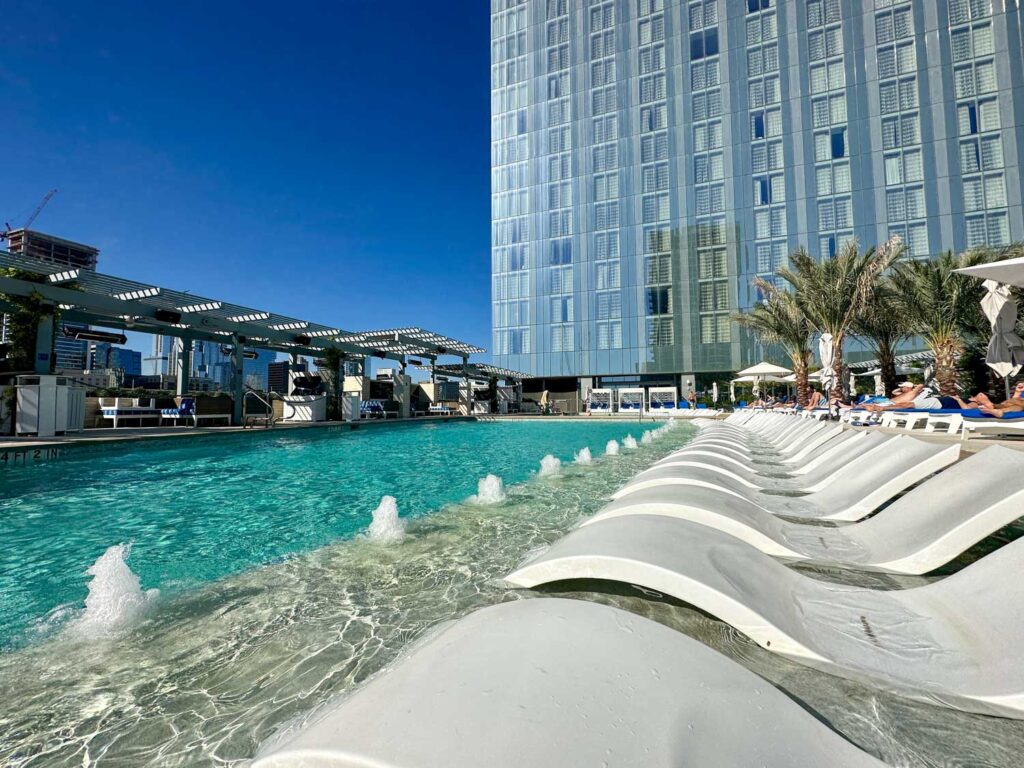
This is an important step! Once you’ve decided on which race you’d like to attend, I don’t actually recommend booking ANYthing just yet.
Instead, you’ll want to look up both ticket and hotel options first. For some races, tickets sell out very quickly and are difficult to come by; and for other races, tickets may be plentiful, but nearby hotels will either sell out quickly or be extremely expensive. If you’re not constrained by a budget, then maybe this doesn’t matter as much — but for most people, it’s a big factor!
So before you fully lock everything in, do a quick search to make sure both tickets AND hotels within your budget are available for your chosen race.
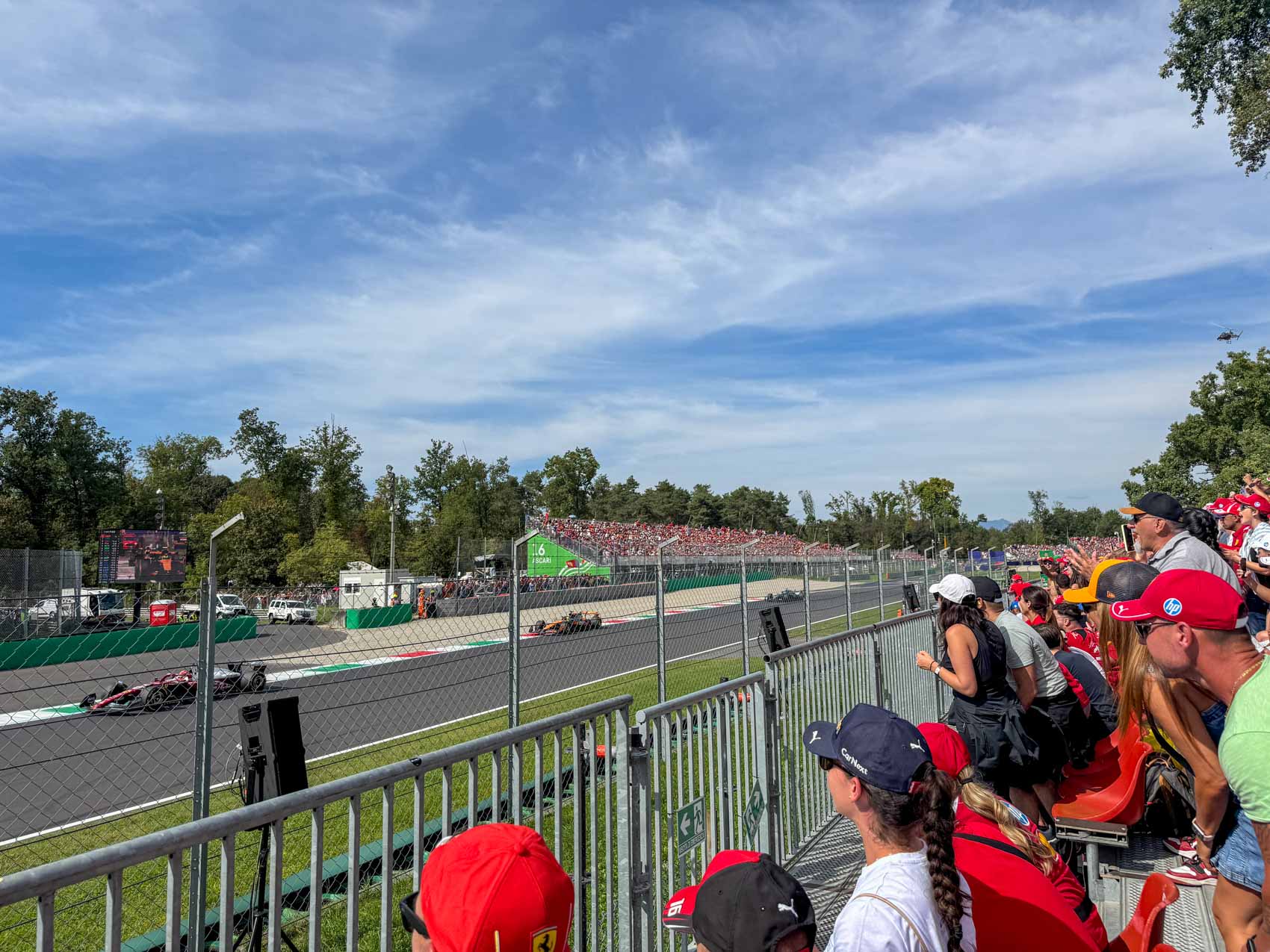
Pro tip: You don’t always have to stay in the race host city, especially for European races. For example, we stayed in Como instead of Monza for the Italian Grand Prix, since it was easier to find a hotel. And trains from Como to Monza are plentiful and affordable.
Step 3: Book a hotel
As long as you’ve done the research in Step 2, you can either opt to book your hotel or your race tickets first. I personally like to lock in the hotel first, as in my experience it’s usually the most challenging part around F1 weekends. (And in many cases, the best hotels will sell out before race tickets are even released!)
Before you book your hotel, you’ll need to already know how many days you plan to be in town. If you’ll be traveling and plan to attend all three days of a race weekend, I recommend arriving on either Wednesday or Thursday and leaving on either Monday or Tuesday. That way, you’ll have some time to explore locally, too, along with spending plenty of time at the track.
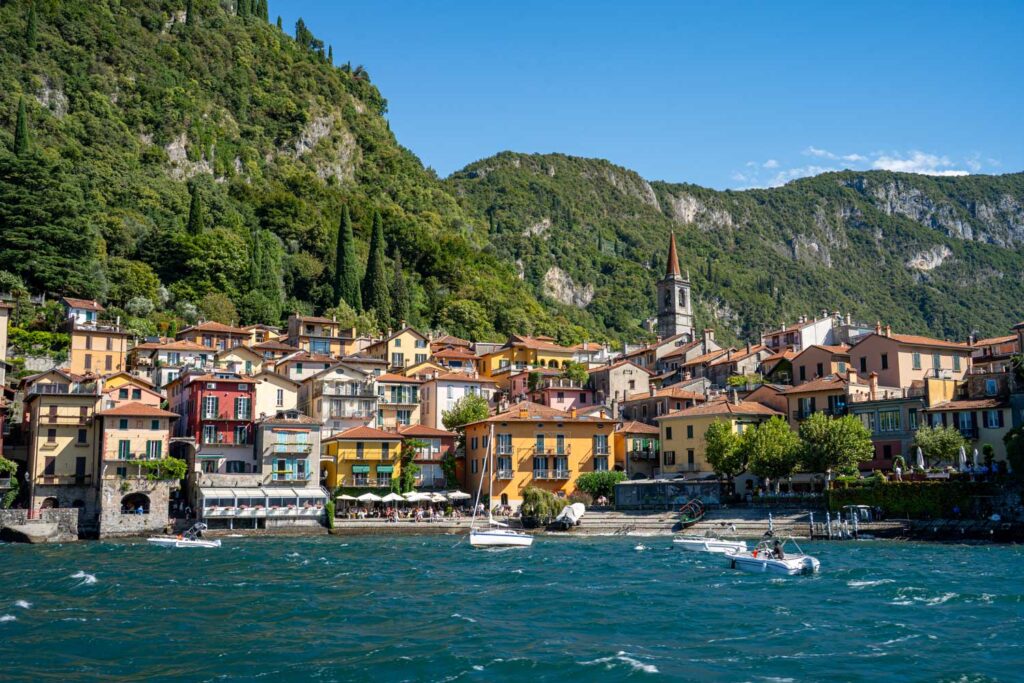
Unless you’re going to a race where you can stay in a hotel basically AT the track (like Las Vegas, for example), then you’ll also need to consider how you’ll get to the track before you decide where to stay.
In many F1 host cities (especially in Europe), you’ll be able to use public transit or race shuttles to get from various nearby cities/towns to the track. (Other than street circuits, F1 races usually take place at tracks that are not in city centers.)
Driving is an option at *some* races — but not all. If you plan to drive, then you’ll want to look for hotel options with parking, and you’ll also want to add buying parking passes at the track to your to-do list.
Step 4: Get race tickets
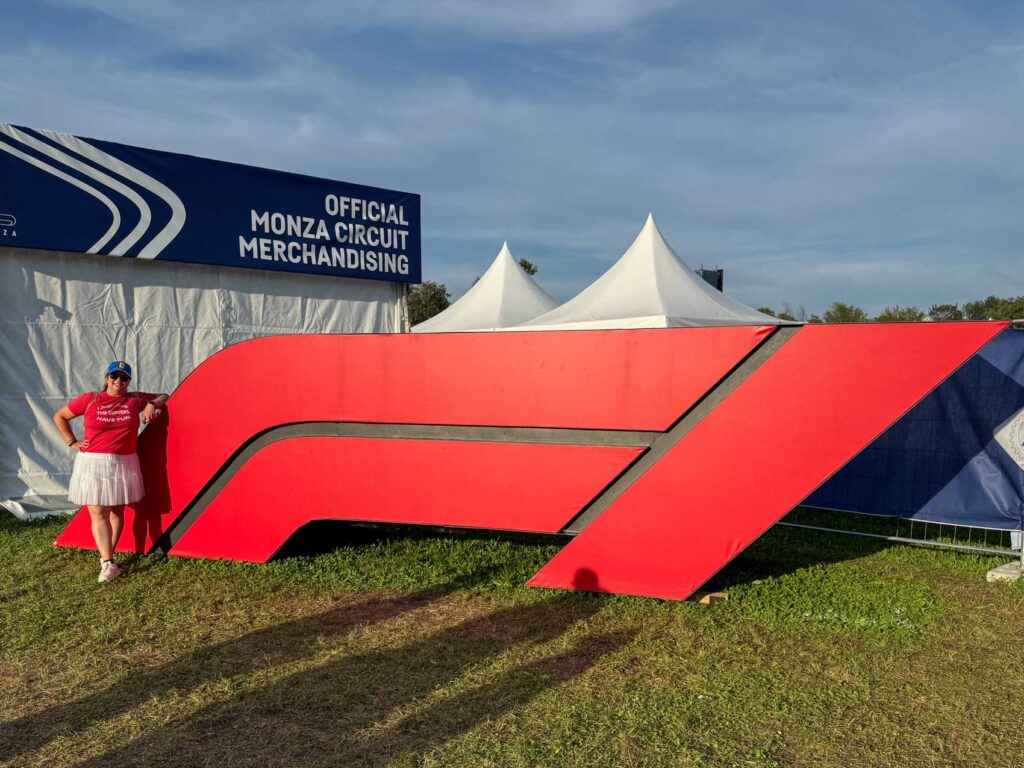
My next step is to buy my race tickets — as long as they’re on sale already; most races go on sale anywhere from 6-12 months in advance, but a few don’t go on sale until 3-4 months before race day.
There are lots of ticket options depending on your budget and how many days of race weekend you want to attend, so there are additional decisions to be made during this step!
I usually recommend going *at least* 2 days, but many people get tickets for all 3 days of a race weekend, especially if they’re traveling pretty far. (And in some cases you might only be able to buy 3-day ticket packages.) It’s my opinion that Friday and Saturday (usually practice and qualifying days) are actually the best ones at the track, as they usually aren’t as crowded/busy as race day on Sunday!
You’ll also need to decide what kind of tickets you want. There are generally 3 main types of tickets to purchase for an F1 race weekend:
- General admission – Sometimes called a “grounds pass,” these tickets are the most affordable at any Formula 1 race. They get you into the track and fan zone(s), but don’t give you an assigned seat (or any seat at all). Most tracks have several designated GA areas — usually grassy, sometimes up on a hill — that you can choose from. GA areas don’t always have the best views, but you’ll be close to the action.
- Grandstand tickets – Some tracks have both bleachers and covered grandstands, but most classify them all as grandstand tickets. With these tickets, you’ll have an assigned seat in whatever grandstand you choose. Grandstands are usually set up at the best corners and straights to see the action.
- Hospitality/VIP tickets – Hospitality tickets are sold by the host track and by companies like F1 Experiences (which sells Champions Club and Paddock Club tickets). These are the most expensive options, but usually get you premium viewing and include things like food and drinks.
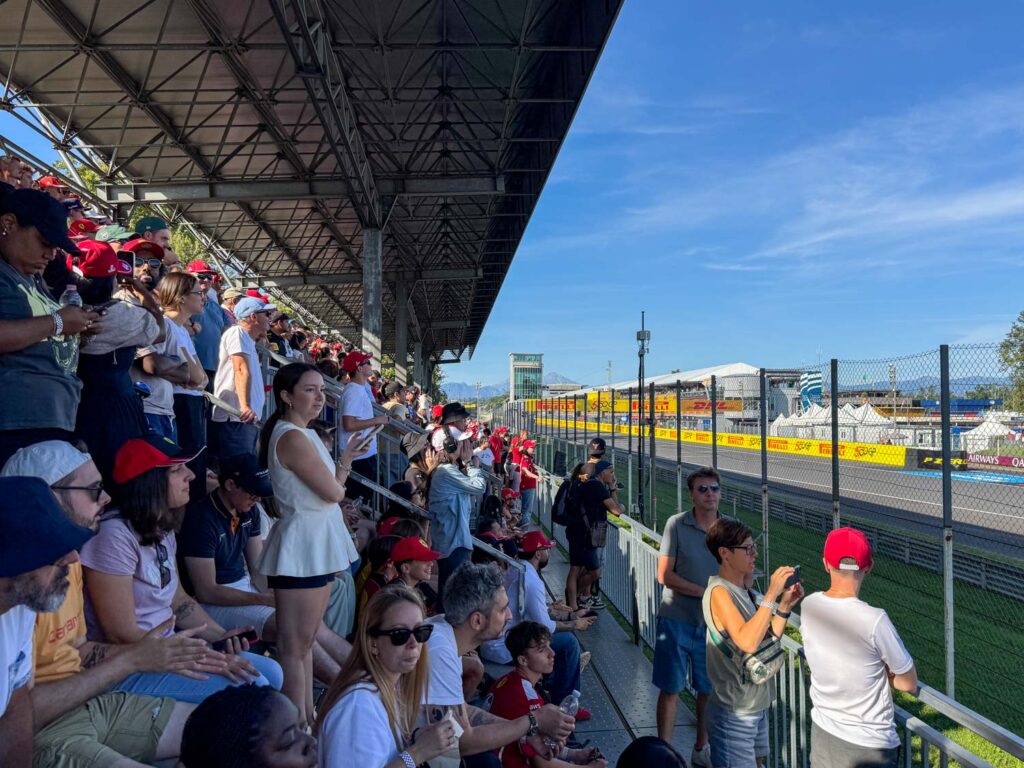
How to decide where to sit?
This totally depends on the race, your budget, and what you want to see! I usually recommend grandstand tickets over GA ones if it’s within your budget, as you don’t have to stress about staking out a spot all day and can fully enjoy everything at the track.
You can usually never go wrong with grandstand tickets on the main straight, as those get you views of the start/finish line and usually the podium ceremony. Grandstands near Turn 1 at nearly every track are also usually a good bet!
Also keep in mind things like whether the seat you’re considering is covered or uncovered, which can make a huge difference on hot or rainy days.
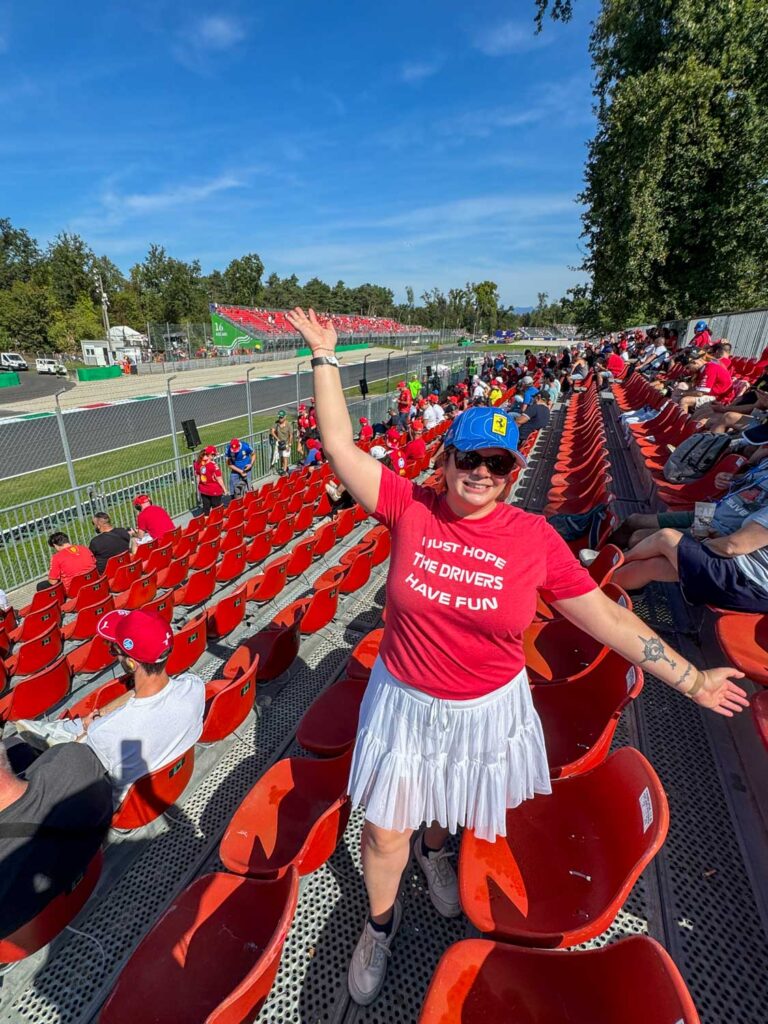
At some races, you might be able to buy single-day tickets. In that case, you might want to buy tickets for different grandstands – or maybe even do 1 day of GA or 1 day in a hospitality suite to get the full experience! Many races only sell 3-day ticket packages, but a few give you the option to try different grandstands every day (I know COTA and Las Vegas usually offer this).
Where do you buy F1 tickets?
The best place to buy any F1 tickets is directly from the host track. They sell GA, grandstand, and VIP/hospitality tickets along with things like parking passes. These will be face-value tickets, always.
If you want to buy fancy hospitality packages not offered by the track (like Paddock Club tickets), then F1 Experiences is where you want to go.
And if you’ve waited too long and the track has sold out of tickets? Then you can try verified re-sellers of F1 tickets. I’ve personally bought tickets from P1 Travel and Senate Grand Prix, which sometimes offer travel packages to go along with their tickets.
Step 5: Book flights/transport
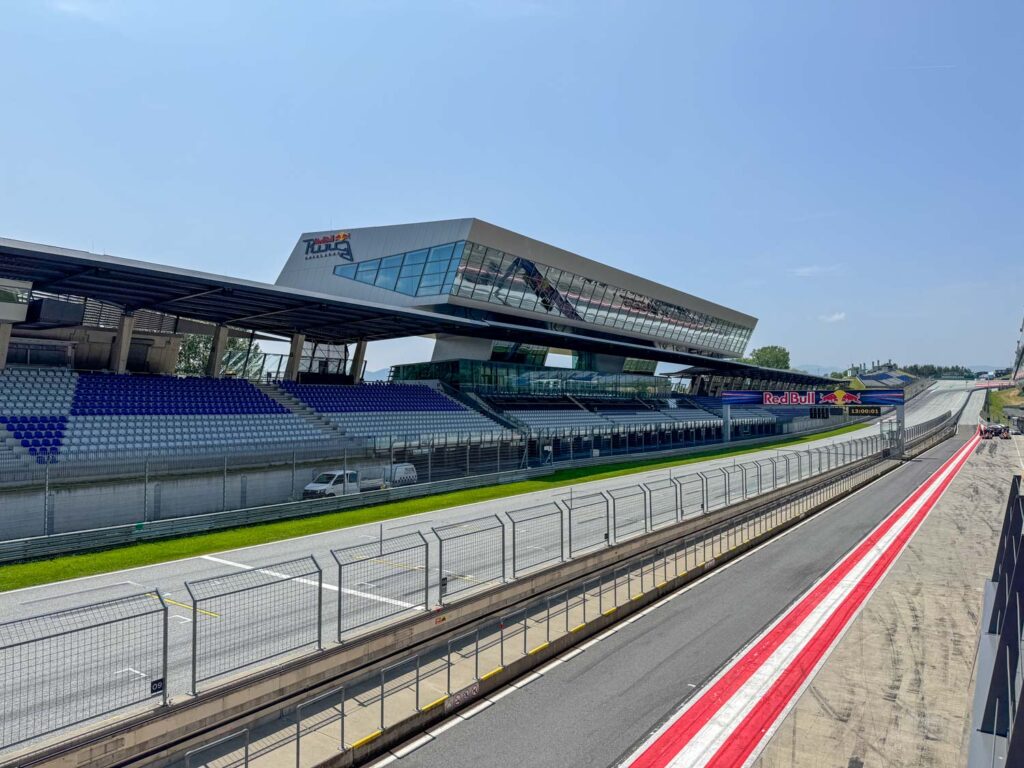
Once you have your hotel and race tickets secured, then it’s okay to go ahead and make whatever other travel plans you need to make, whether that’s booking flights or a train, renting a car, etc.
You don’t necessarily need to do this as far in advance as you might need to book your hotel and race tickets, but don’t procrastinate too much. For races that draw hundreds of thousands of spectators, flights in/out of the closest major airport around race weekend do tend to surge up in price.
(If you’re planning to go to a race in Europe, definitely consider whether there might be another major airport you can fly into if you want to cut down on flight costs. For example, flights in/out of Milan around Italian Grand Prix weekend last year were outrageously expensive. So Elliot and I flew into Zurich, Switzerland instead and then took a train to where we were staying in Italy!)
Step 6: Figure out how to get to the track
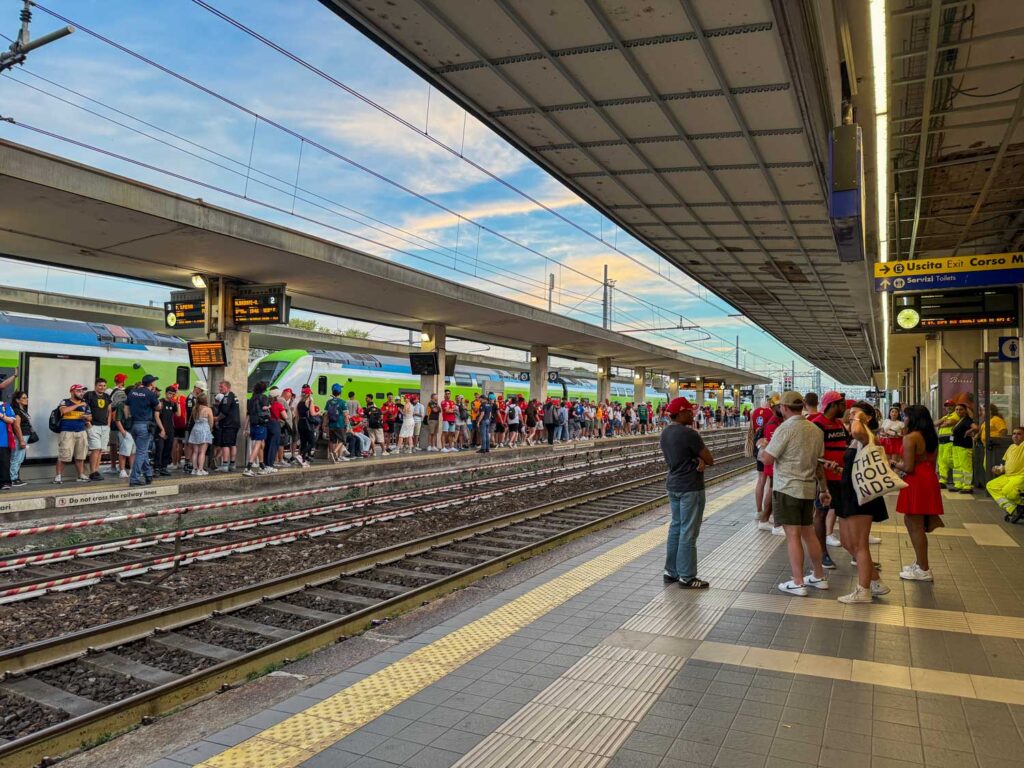
You likely already researched this briefly before you booked your hotel, but close to race weekend you’ll need to fully figure out how you’re going to get to/from the track.
If you book hospitality or VIP tickets, your transport to the track might be included (which honestly is SO worth it). If you’re planning to drive yourself, you should have already purchased a parking pass. But otherwise, you’ll want to figure your options for getting to the track.
Many tracks have easy public transit links, and many others will have special shuttles running during race weekend to get you to there. Have a plan for how you’ll get to the track so you don’t have to stress about it at the last minute!
Step 7: Pack appropriately
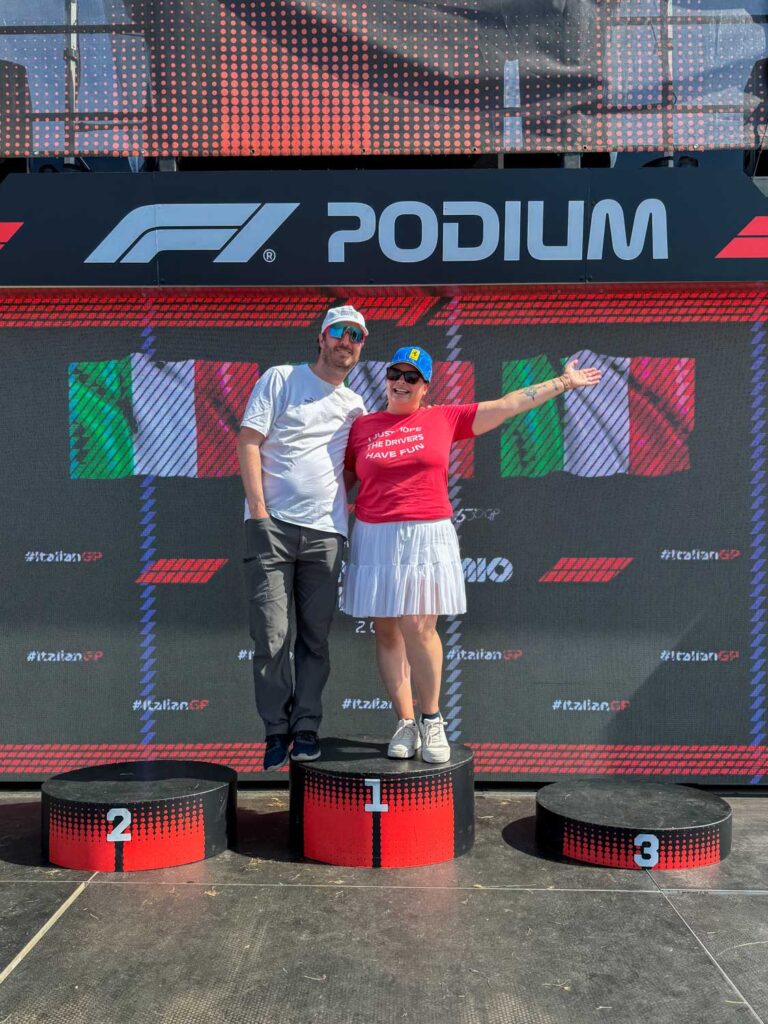
Closer to race weekend (or whenever you’re packing for your trip), make sure you’re taking into account everything you’ll need to take with you to the track.
You want your F1 outfit to be fun but functional; keep in mind that you’ll be doing LOTS of walking, and that you’ll likely be spending lots of time out in the weather elements, whatever they may be.
Be sure to wear GOOD SHOES, and dress for the weather forecast — which can range from cold rain to blazing hot sun! (Here’s my guide for what to wear to an F1 race.)
I also highly recommend ear plugs, a power bank for your phone, and perhaps a seat cushion for GA or grandstand seats. Here’s my full F1 packing list!
You’ll also want to check the rules of the track you’ll be going to to learn whether you can bring your own food/drinks. If you can, you’ll save some money!
RELATED: What to Pack for a Formula 1 Race: Your F1 Survival Kit Guide
Step 8: Budget for food/merch
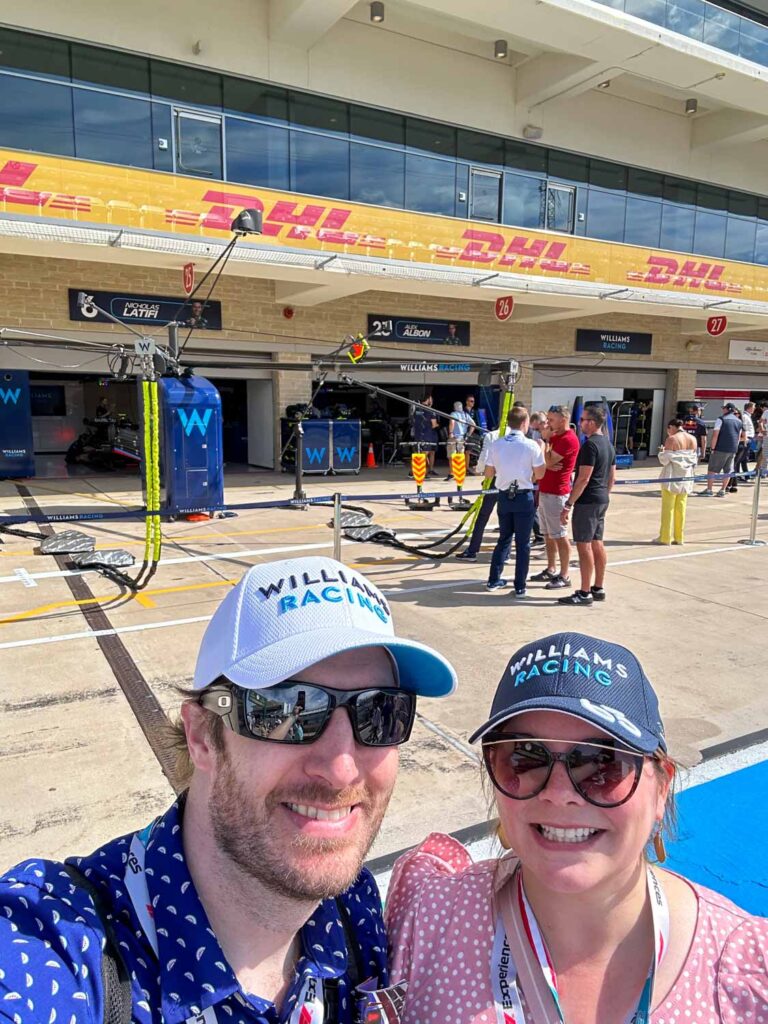
Speaking of money, you’ll want to set aside some money to spend at the track. The fan zone is generally free, but you’ll probably need some money for food, drinks, and potentially some race merch.
(Personally, I always advise against buying F1 team merch at a race, as the prices are always wildly inflated at the track — like 40% more expensive in some cases! But there’s sometimes track-specific merch that you might not find elsewhere.)
If you plan to eat multiple meals at the track and stay hydrated throughout the day, I would suggest budgeting $10-$20 per person per meal, and $5 for sodas and $10-$15 for beer (though of course prices vary from track to track).
Pro tip: If you are an American Express credit card user, know that there are perks at many Formula 1 races for you! Bring your AMEX card with you to the track, and you can skip the security line at the main gate, skip lines in the fan zone, and sometimes pick up freebies like race radios, seat cushions, and more.
And there you have it! You should be well prepared to plan your very own F1 trip now. Which race will you go to?
